
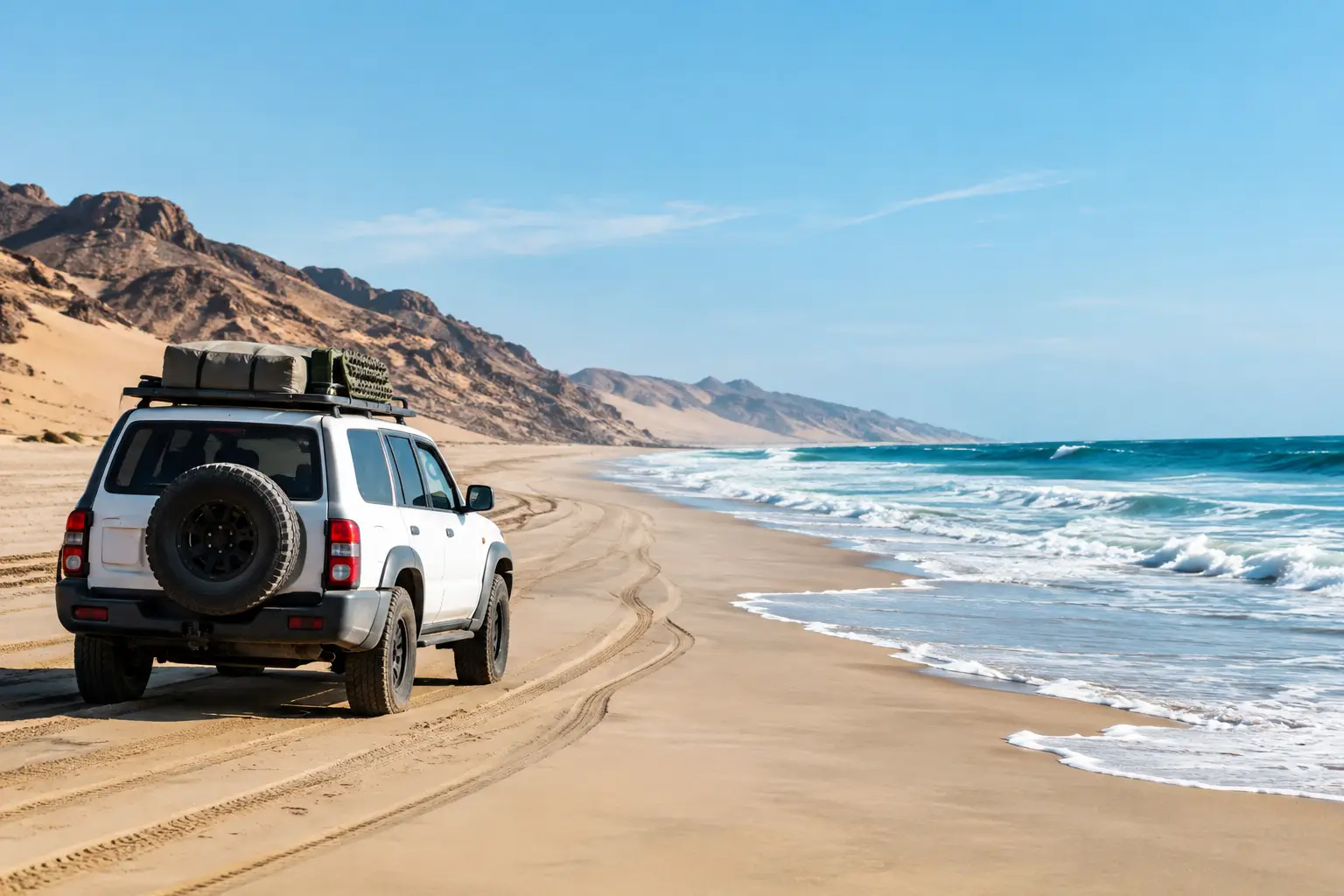
The tide is out, the Atlantic is throwing white spray across the shore, and the dunes rise like a gold wall beside your tracks. Namibia beach driving can feel completely wild, but beach driving rules are what keep that freedom possible. On this coast, a wrong turn can put your vehicle in deep trouble, disturb protected wildlife, or take you into an area where driving is not allowed.
The best coastal adventures combine adrenaline with respect for the terrain. Whether you are joining a guided excursion near Sandwich Harbour or planning a self-drive route in a properly equipped 4x4, know the rules before your tires touch the sand.
Beach Driving Rules Start Before You Leave the Road
Namibia’s coastline is not one giant off-road playground. Much of the central coast falls within protected areas, including the Dorob National Park, where vehicle movement is managed to protect sensitive dune, salt marsh, and shoreline environments. Access rules, permit requirements, and open routes can change by location and season.
Do not assume a track is legal because it has tire marks on it. Old tracks may lead into restricted ground, across nesting areas, or toward soft pans where recovery is difficult. Check the current access requirements with the relevant local authority, your rental provider, or an experienced local operator before setting out. If your route requires a permit, arrange it in advance and keep it with you.
A rental vehicle also needs the right approval. Some rental agreements exclude beach, dune, or off-road driving entirely, while others require written permission and specific insurance cover. A 4x4 badge on the tailgate is not a free pass. Read the agreement closely, especially the excess terms for underbody, tire, clutch, and water damage.
Stay on Authorized Tracks and Keep Clear of Wildlife
The coast looks empty until you know what to look for. Shorebirds, nesting birds, seals, reptiles, insects, and fragile plants all rely on habitats that can be damaged by a single vehicle crossing. Salt pans and marshy areas may appear firm, then collapse under the weight of a truck.
Stay on designated routes and established crossings. Do not create new tracks to get around soft sand, reach a fishing spot, or find a better photo angle. Driving across vegetation and undisturbed dune faces leaves scars that can last far longer than your holiday.
Give animals room. Never chase, circle, feed, or block wildlife for a photograph. If you see birds gathered on the shore, seals resting near the water, or animals using a route ahead, slow down and allow space. Your most memorable photo should never come at the cost of an animal’s safety.
Keep noise under control too. Loud music and spinning tires may feel dramatic, but they disturb wildlife and make it harder to hear changing surf, another vehicle, or your guide’s instructions.
Read the Tide Before You Read the Sand
The ocean is the biggest variable on a beach drive. A broad, hard-packed beach can disappear quickly as the tide rises, especially around headlands, lagoons, and narrow sections of coast. Water does not need to be deep to stop a vehicle. Saltwater can also cause serious mechanical and electrical damage.
Check tide times before departure and plan the route with a generous margin. Do not try to squeeze through a narrow stretch simply because another driver did it earlier. The tide, wind, and sand conditions may have changed completely.
As a practical rule, keep well clear of the waterline, avoid driving through seawater, and always leave yourself an exit route. Watch the wave pattern for several minutes before approaching a low section. A larger set of waves can arrive without warning and turn firm sand into a trap.
If the tide is moving in and your route becomes uncertain, turn around early. There is no prize for pressing on. A safe retreat is part of confident off-road driving.
Use the Right 4x4 Setup for Soft Sand
Beach driving is not about speed. It is about momentum, smooth inputs, and knowing when to stop before the vehicle digs in. Use a suitable 4x4 with enough ground clearance, reliable recovery points, and tires in good condition. A two-wheel-drive vehicle is not the machine for deep coastal sand.
Before entering soft sand, engage the appropriate four-wheel-drive range as recommended by the vehicle manufacturer. Many situations call for low range, particularly when climbing dunes, moving slowly through deep sand, or recovering a vehicle. Keep steering movements gentle, avoid hard braking, and maintain steady momentum rather than accelerating aggressively.
Tire pressure makes a major difference. Lower pressure increases the tire’s footprint, helping it float over soft sand instead of cutting down into it. The correct pressure depends on your vehicle, tire type, load, and surface conditions, so follow the guidance from your vehicle supplier or a qualified local instructor. Do not guess, and reinflate tires to safe road pressure before returning to pavement.
Carry the equipment that fits the route, not just the Instagram moment. At minimum, have water, a charged phone, a basic first-aid kit, a tire gauge, an air compressor, recovery boards, and a shovel. A rated recovery strap and proper recovery points are valuable, but only if everyone involved knows how to use them safely.
If You Get Stuck, Stop Spinning
The moment the tires spin, ease off. Hard acceleration throws sand behind the wheels and creates deeper holes. Get out, assess the ground, and clear sand from around the tires and under the chassis. Reduce tire pressure only within the safe range advised for your vehicle, use recovery boards if you have them, and move out smoothly.
Never attach a recovery strap to a tow ball. Tow balls can fail under load and become dangerous projectiles. If you are unsure about a recovery, call for experienced assistance rather than turning a manageable stuck vehicle into an injury or a damaged chassis.
Dunes Are Not Shortcuts
Coastal dunes demand a different kind of respect. Their shape can hide steep drop-offs, soft crests, blind descents, and other vehicles approaching from the opposite side. Never drive over a dune crest without knowing what lies beyond it.
Use approved dune routes only, follow the route direction where one is indicated, and approach crests slowly and squarely. Avoid sharp turns on slopes. Side-sloping can cause a rollover, particularly in a loaded vehicle. If you cannot see a safe line, do not commit to it.
This is where guided experience changes the day. A knowledgeable guide reads the windblown surface, understands the permitted terrain, and knows which sections are safe for beginners. Dominus Dune Tours offers the kind of local guidance that lets travelers enjoy the huge dunes and ocean views without carrying the pressure of route-finding alone.
Drive With Your Group, Not Against It
Solo beach driving raises the stakes. Mobile reception can be unreliable, distances can be deceptive, and one stuck vehicle can become a long wait. If you are self-driving, travel with at least one other capable vehicle where possible and agree on a route, turnaround time, and communication plan before departure.
Leave enough space between vehicles so the driver behind has room to stop or change direction. Never tailgate on sand, especially near crests or the waterline. Use radios if available, and make sure every driver understands basic recovery safety.
Fuel is another non-negotiable. Sand driving uses more fuel than regular road driving, and detours around soft areas can make a short distance much longer. Start with more fuel than you think you need, plus drinking water for everyone in the vehicle. Coastal fog can roll in fast and reduce visibility, so pack warm layers even on a sunny day.
Leave the Coast Better Than You Found It
Take out every item you bring in, including food scraps, cigarette butts, fishing line, and broken gear. Do not bury trash in the sand. Wind and tides will uncover it, and wildlife may ingest it.
Use established facilities where available. If nature calls far from one, move well away from water, tracks, and wildlife habitat, and follow local guidance for waste disposal. Fires may be restricted or prohibited in sensitive areas, so never assume a beach fire is allowed.
The best beach drive is not the one with the most dramatic tire marks. It is the one where you return with incredible photos, a clean vehicle, safe passengers, and a coastline that looks just as wild for the next travelers. Give the tide room, give the wildlife space, and let the dunes set the pace.