
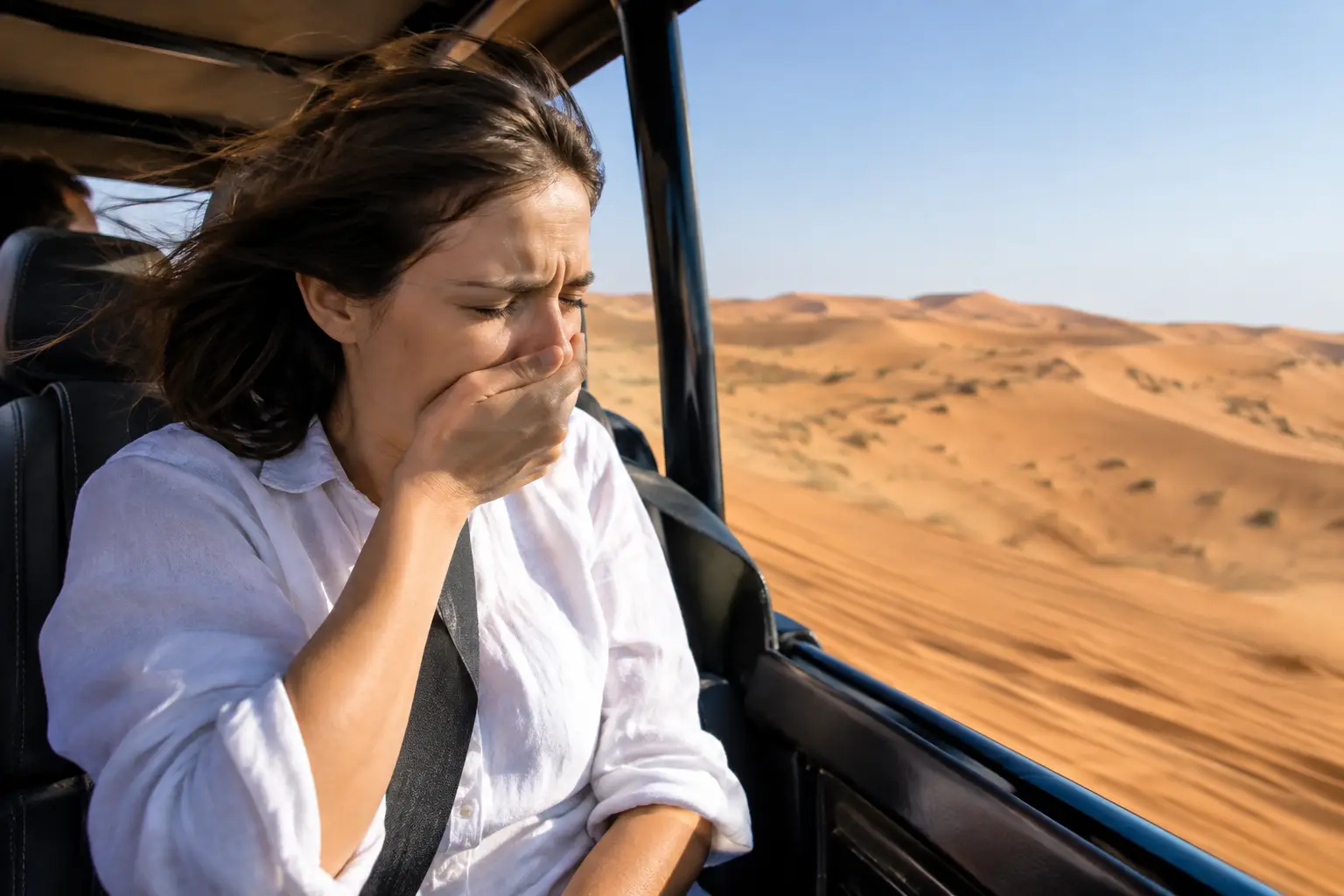
A dune drive can be one of the most exciting ways to see Namibia: tires gripping soft sand, Atlantic fog rolling over towering ridges, and views that seem to run forever. But can passengers get motion sickness when the route climbs, drops, and turns across uneven terrain? Yes, they can. The good news is that it is usually manageable, and it should not stop most travelers from enjoying an epic desert adventure.
Motion sickness is not a sign that someone is weak, nervous, or unfit for an off-road experience. It is simply the body reacting to mixed signals. Your inner ear senses movement, while your eyes may be focused inside the vehicle or unable to predict the next change in direction. On a dune tour, that mismatch can be stronger than it is on a smooth paved road.
Can Passengers Get Motion Sickness in a 4x4?
Passengers can get motion sickness in a 4x4, especially during dune driving, winding coastal tracks, or long stretches of corrugated gravel road. Sand is constantly changing, so a skilled driver adjusts speed, line, and steering to suit the terrain. That can mean gentle side angles, flowing turns, short climbs, and controlled descents that feel very different from regular road travel.
Not every guest will feel sick. Some travelers love the movement and come away buzzing from the ride. Others may feel queasy, sweaty, tired, light-headed, or unusually sensitive to smells. Children, people who already get carsick, and travelers who are dehydrated, overtired, or hungover may be more likely to feel it.
The terrain matters too. A scenic drive along the coast may include a mix of firm beach sand, soft dune faces, and uneven tracks. A higher-energy dune excursion can involve more changes in angle and direction. If you know you are sensitive to motion, tell your guide before departure. That simple conversation helps the team place you in the best seat and set realistic expectations for the route.
Why Dune Driving Feels Different
A vehicle moving across dunes does not behave like one traveling on asphalt. The surface shifts under the tires, and the route often follows the natural shape of the sand rather than a straight line. A good guide reads the terrain carefully, but the ride will still include movement that your body may not expect.
There is also a visual factor. Looking down at a phone, checking camera settings, or studying a map inside the vehicle can make symptoms arrive faster. Your eyes see a still object close up while your balance system feels turns, bumps, and changes in elevation. That is the classic motion-sickness recipe.
Heat can add another layer. Namibia's desert landscapes are spectacular, but dry air and sun can leave travelers dehydrated before they even climb into a 4x4. Dehydration does not cause motion sickness by itself, but it can make nausea and headaches feel more intense. A heavy breakfast, too much alcohol the night before, or an empty stomach can have the same effect.
How to Reduce Motion Sickness Before Your Tour
Preparation makes a real difference. Start with water. Drink steadily before the trip rather than trying to catch up once you feel unwell. Eat a light, familiar meal that gives you energy without sitting heavily in your stomach. Toast, fruit, eggs, yogurt, or a simple sandwich generally works better than a rich, greasy breakfast.
If you have a history of motion sickness, consider an over-the-counter remedy before the tour. Speak with a pharmacist or doctor first, particularly if you take other medication, are pregnant, or have a health condition. Some motion-sickness medicines can make you drowsy, which may be fine for a relaxed passenger but less ideal if you are planning to drive yourself later that day.
Choose your seat carefully. Sitting toward the front of the vehicle often helps because you can see farther ahead and anticipate the movement. Keep your gaze outside and toward the horizon instead of watching the sand rush past close to the window. Fresh air can also help, so ask whether a window can be opened when conditions allow.
Avoid reading, scrolling, or reviewing photos while the vehicle is moving. It is tempting when the scenery is dramatic, but wait until the vehicle stops at a viewpoint. You will enjoy the images more, and your stomach will thank you.
What a Professional Guide Does Differently
A well-run dune experience is not about throwing a vehicle around for a quick thrill. It is about controlled driving, terrain knowledge, and choosing a route that delivers excitement without unnecessary risk. Professional guides understand how sand changes with weather, tides, wind, and vehicle weight. They select lines that suit the conditions and keep passengers comfortable where possible.
They also know when to pause. Stops are part of the experience, not a disruption to it. Step out, breathe in the coastal air, take in the scale of the dunes, and give your body a moment to reset. On a guided trip, guests can let the driver focus on the technical work while they enjoy the landscape.
At Dominus Dune Tours, guests can mention any motion-sickness concerns before the adventure begins. Guides can offer practical advice, help with seating, and make sensible adjustments when conditions and the route allow. The goal is still the same: big desert scenery, safe hands-on adventure, and memories that last a lifetime.
If You Start Feeling Sick During the Ride
Say something early. Many people wait because they do not want to slow down the group, then feel much worse than necessary. Your guide would rather know when symptoms are mild. A short stop, a change of seat, cooler air, water, and a few minutes looking at a stable horizon can be enough to settle things.
Try to keep your head still against the seat and look ahead rather than sideways. Take slow breaths. Sip water instead of drinking a large amount quickly. If you have ginger chews, peppermint, or a doctor-approved motion-sickness remedy with you, use it as directed.
Do not push through severe symptoms. Vomiting, dizziness that does not improve, fainting, chest pain, or a severe headache deserve attention, especially in heat. Tell the guide clearly how you feel. Desert tours operate in remote, exposed environments, and clear communication is part of staying safe.
Are Dune Tours Suitable for Kids and Sensitive Travelers?
Usually, yes, provided the experience matches the traveler. Families often enjoy dune tours because there is so much to see beyond the driving itself: animal tracks, changing sand colors, ocean views, and huge open spaces. A child who gets carsick on winding roads may still do well with the right preparation, a front-facing view, snacks, water, and regular breaks.
For very young children, travelers with recurring severe motion sickness, or anyone managing a medical condition, ask about the pace and terrain before booking. A quieter scenic route may be a better fit than a high-energy dune drive or sandboarding session. Private tours can be especially useful for couples, families, and groups who want more flexibility around comfort stops and driving intensity.
Self-drive travelers should be realistic too. Driving in sand requires concentration, technical judgment, and a calm approach. If a passenger feels sick, do not try to rush the route. Stop safely on suitable ground, hydrate, and reassess. A dune-driving lesson or guided support can take pressure off the driver and make the experience far more enjoyable for everyone in the vehicle.
The Best Mindset for a Desert Adventure
Motion sickness is possible, but it is not the defining feature of dune travel. Most guests feel better when they arrive rested, hydrated, lightly fed, and ready to look up from the vehicle rather than down at a screen. Tell your guide what you need, choose an experience that suits your group, and leave room in the day to enjoy the stops as much as the drive.
The desert rewards travelers who slow down enough to feel its scale. Keep your eyes on the horizon, let the guide handle the sand, and give yourself permission to pause when your body asks for it.