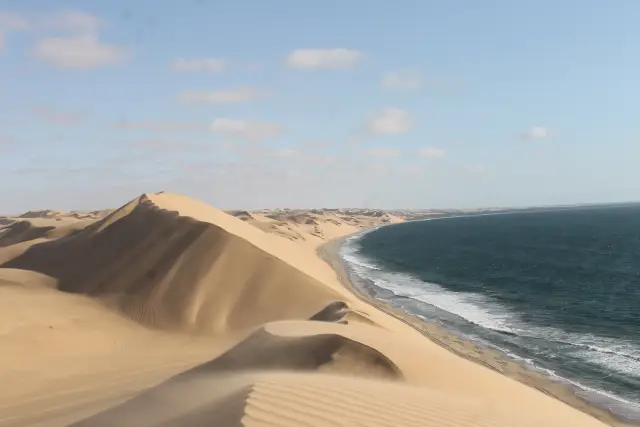
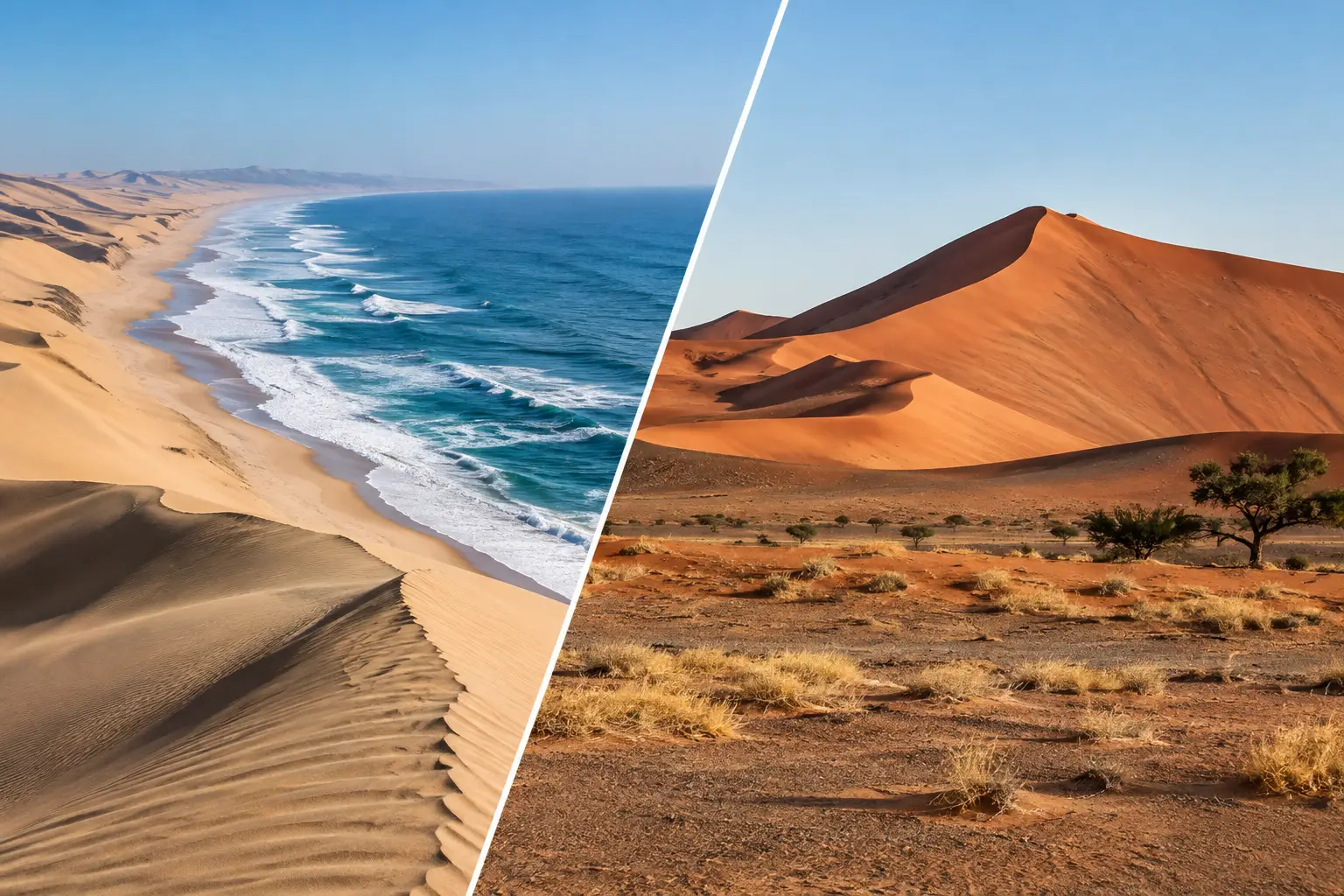
The most dramatic moment on Namibia's coast is not always the ocean. It is the instant your 4x4 climbs a golden ridge and the Atlantic appears on one side while the Namib stretches endlessly on the other. That is the real thrill behind coastal dunes versus inland dunes: two dune worlds shaped by the same desert, yet built for completely different adventures.
For travelers deciding between Sandwich Harbour, Langstrand, Moon Valley, and the towering dunes around Sossusvlei, the choice is not simply about which landscape looks better in a photo. It affects the terrain beneath your tires, the weather you should expect, the type of wildlife you may see, and how you experience the desert itself.
Coastal Dunes Versus Inland Dunes: The Big Difference
Coastal dunes sit close to the cold Atlantic, where ocean fog, tides, salt air, and wind constantly influence the sand. Inland dunes lie farther from the coast, where the desert's heat, dry air, and long-established sand systems take control. Both are spectacular. They simply deliver their drama in different ways.
On the coast, the landscape feels alive and changeable. Fog can roll across the dunes in the morning, tracks can disappear after a windy night, and the route near the ocean may be shaped by tide conditions. At Sandwich Harbour, the main attraction is this collision of elements: immense sand faces dropping toward a narrow strip of beach, with lagoon, sea, and desert all sharing the same horizon.
Inland dunes feel broader, hotter, and more monumental. Places such as Sossusvlei are famous for huge red-orange ridges, sharp crests, dry pans, and shadows that change by the minute. The experience is less about following the edge of the ocean and more about standing in a desert that seems to have no boundary at all.
Coastal Dunes: Where the Desert Meets the Atlantic
Namibia's coastal dunes are among the most exciting 4x4 environments in the country. The sand is often softer and more unpredictable than travelers expect, especially after fog or changing wind conditions. Add steep slopes, blind crests, beach sections, and tidal timing, and you have terrain that demands respect.
That is exactly why a guided coastal dune tour is so rewarding. A local driver knows when the beach is passable, where the safe approaches are, and how to read the sand before committing a vehicle to a slope. What looks like an open route can quickly become a recovery job if the tide comes in or the vehicle loses momentum in soft sand.
What makes coastal dunes unforgettable
The scenery is the headline. At Sandwich Harbour, towering dunes meet the Atlantic in a way few places on Earth can match. You may spot flamingos in the lagoon, seals along the shore, and seabirds moving through the coastal air. The desert is still harsh and powerful, but the fog and ocean create a cooler, moodier atmosphere than many visitors associate with Namibia.
Coastal dunes are also ideal for travelers who want high-energy action without committing to a multiday desert journey. A well-planned 4x4 excursion can pack in steep dune driving, incredible viewpoints, beach travel, and a true sense of expedition within a half-day or full-day experience.
The trade-off is that coastal conditions can change quickly. A route that is perfect at low tide may not be available later. Wind can reduce visibility, and fog can make the morning feel surprisingly cold. Bring layers, sunglasses, sunscreen, and a camera protected from fine sand.
Is coastal dune driving suitable for beginners?
Yes, with the right setup. Passengers can enjoy the full thrill from a guided vehicle, while self-drive travelers can build confidence through dune driving lessons and practical route guidance. The key is not bravado. Coastal sand rewards smooth steering, controlled momentum, correct tire pressure, and a driver who knows when not to push ahead.
If you are renting a 4x4 and have limited sand-driving experience, do not treat the coast like an open playground. Conditions, tides, and dune angles matter. Professional guidance turns a potentially stressful day into an epic one.
Inland Dunes: Big Heat, Big Views, Big Silence
Inland dunes deliver the classic Namib image: deep red sand, towering slopes, and vast open skies. Their color comes from iron oxide coatings on the sand grains, which deepen over time and glow most intensely around sunrise and sunset. This is why Sossusvlei has such a legendary reputation with photographers, hikers, and travelers who want to feel small in the best possible way.
The inland desert is generally drier and hotter than the coast. Summer temperatures can climb fast, while early mornings and evenings may feel crisp. Planning matters here. An early start is often the difference between an enjoyable dune climb and a hard slog under a fierce midday sun.
The inland dune experience is less rushed
Where the coast brings movement, moisture, and changing access, inland dunes invite you to slow down. A climb up a ridge can be physically demanding, but the reward is pure scale. From the top, you can see wave after wave of sand stretching toward distant mountains and ancient pans.
This is also where guided tours add value beyond transport. A knowledgeable guide can explain how dunes form, why their ridges shift, how desert creatures survive, and why some pans hold dead camel thorn trees for centuries. The landscape is not empty. It is full of stories written in tracks, wind patterns, and geology.
For families and first-time desert visitors, an inland trip can feel more accessible than technical coastal driving. You can focus on walking, scenery, and photography rather than the demands of beach timing and soft-sand vehicle recovery. Still, heat management is serious business. Carry plenty of water, wear a hat, use sunscreen, and listen when your guide recommends turning back from a climb.
Which Dune Adventure Fits Your Trip?
Choose coastal dunes if you want action, changing terrain, and that rare desert-meets-ocean view. Sandwich Harbour and the areas around Walvis Bay are especially strong choices for travelers based in Swakopmund or Walvis Bay, couples looking for a scenic adrenaline hit, and groups who want a memorable 4x4 experience without spending multiple days on the road.
Choose inland dunes if your dream is sunrise over red sand, long desert horizons, iconic hiking routes, and the quiet grandeur of Sossusvlei. This is a better fit for travelers with more time, photographers chasing warm light, and anyone who wants to experience the scale of the Namib away from the coast.
If your itinerary allows, do both. They do not compete as much as they complete each other. Coastal dunes show Namibia at its wildest intersection of land and sea. Inland dunes reveal the ancient heart of the desert.
What Both Environments Demand
Whether you are standing on a Sossusvlei ridge or crossing the sand near the Atlantic, the desert deserves preparation. Water, sun protection, closed shoes, and clothing layers are practical essentials. Sand gets everywhere, temperatures can swing, and remote terrain has no room for casual assumptions.
For self-drive visitors, the most important decision is knowing your limits. A rental 4x4 is capable, but capability is not the same as experience. Soft sand, steep descents, and isolated routes require proper tire pressure, recovery knowledge, and good judgment. Dominus Dune Tours can help travelers experience the terrain with expert local support, whether they prefer to ride with a guide or gain skills before taking on a self-drive route.
The best dune day is not the one where you take the biggest risk. It is the one where you can look back at the tracks in the sand, feel the wind coming off the Atlantic or across the desert, and know you had the confidence to enjoy every second of it.
When you plan your Namibia adventure, leave room for both kinds of sand. Watch the tide at the coast, wake before the heat inland, and let the desert show you why no two dune horizons are ever the same.