
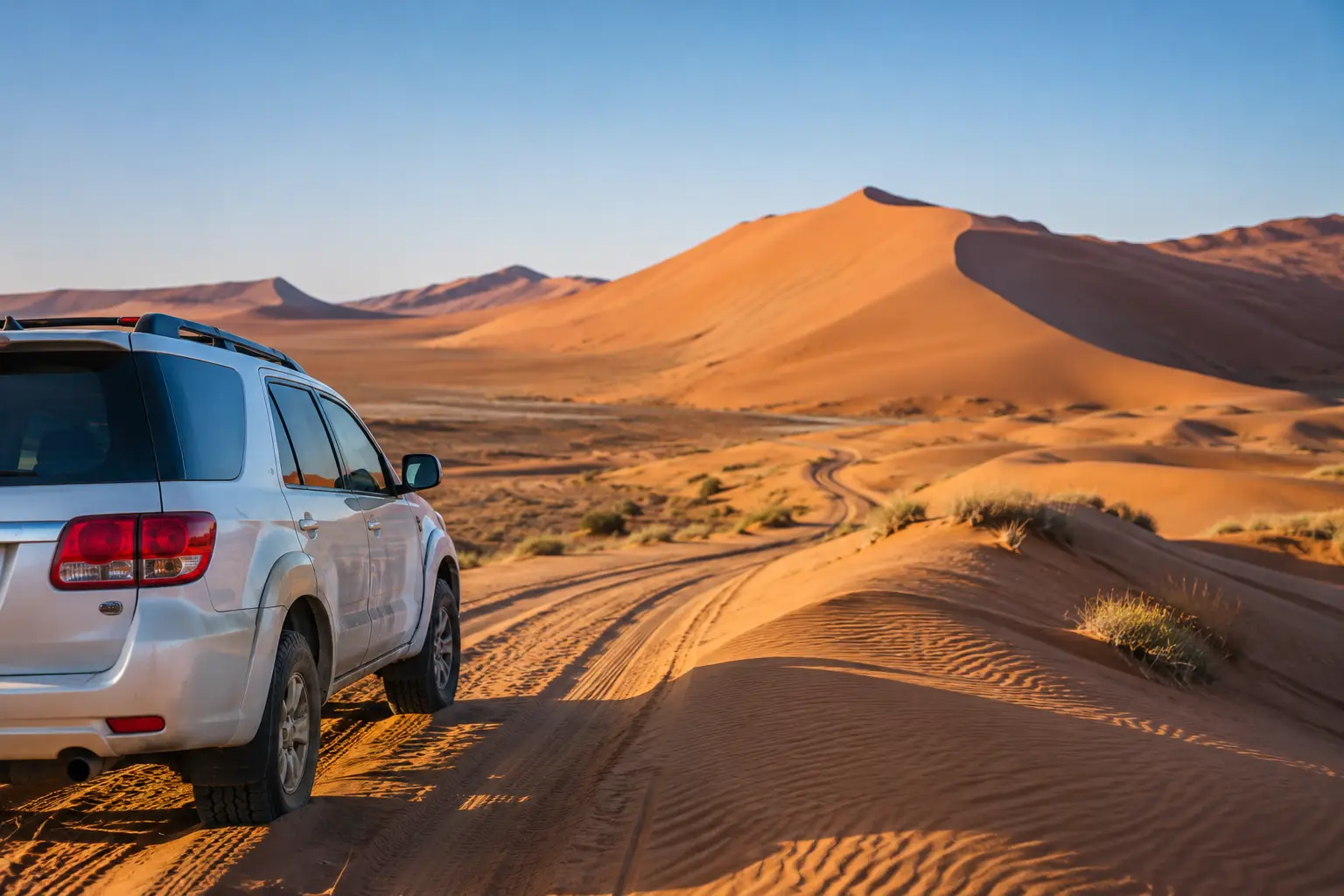
A self drive dune route example should do more than draw a line across the sand. It should help you judge the terrain, protect your vehicle, and know exactly when the smart move is to turn around. Namibia’s dunes can deliver an epic 4x4 day, but soft sand, blind crests, coastal fog, and changing tides demand respect.
This example is designed for confident self-drive travelers based around Swakopmund, Walvis Bay, or Langstrand. It is not a substitute for local permits, current route conditions, or a qualified guide. Think of it as the framework for a proper desert day: spectacular views, controlled momentum, and no unnecessary drama.
Self Drive Dune Route Example: A Smart Half-Day Plan
Start early from the Swakopmund or Langstrand area, ideally after checking weather, wind, and coastal conditions. Morning light brings out the shape of the dunes, temperatures are milder, and you have more time to make careful decisions before the sand heats up.
Your first section should be a gentle sand familiarization run on legal, established tracks close to the coast or on approved dune terrain. This is where you test your tire pressure, steering response, throttle control, and comfort level. Do not begin by pointing your 4x4 at the tallest dune in sight. A few minutes on flatter sand will tell you a lot about how the vehicle behaves.
From there, build toward a series of moderate dune crossings rather than a single ambitious climb. Follow an experienced vehicle only at a safe distance, or use clearly known tracks where permitted. Keep your route simple: travel out along a recognizable line, stop at a safe viewpoint, then return by the same route or via an approved loop. The goal is to enjoy the terrain without creating a navigation problem in a landscape where tracks can disappear quickly.
A practical half-day route has three phases. First, warm up on firmer sand. Second, take on controlled dune ascents and descents with plenty of room to recover. Third, stop at a high viewpoint for photos, water, and a vehicle check before heading back while everyone is still focused and energized.
If you are heading toward the Walvis Bay and Sandwich Harbour region, the planning becomes more serious. The meeting point between giant dunes and the Atlantic is unforgettable, but beach access can be affected by tides and conditions change fast. Self-driving there should only be attempted with current local knowledge, the right permissions, and a realistic understanding of your vehicle and recovery skills. For many travelers, this is the moment to leave the driving to a specialist guide and enjoy the scenery without the pressure.
Before You Leave the Pavement
Sand driving rewards preparation far more than bravery. A rental 4x4 with a low-range transfer case, good ground clearance, and proper all-terrain tires is a strong starting point. All-wheel drive can be useful on some surfaces, but it is not the same as a capable 4x4 in deep, loose sand.
Tire pressure is one of the biggest factors. Lower pressure increases the tire’s footprint and helps the vehicle float across soft sand rather than dig in. The correct pressure depends on the vehicle, tire type, load, and sand conditions, so use your rental company’s guidance or local advice. Bring a reliable compressor because tires must be reinflated before returning to paved roads.
Carry more water than you think you will need, along with sun protection, snacks, a charged phone, offline navigation, and a basic first-aid kit. A shovel, recovery boards, tow strap, tire gauge, and compressor are not glamorous accessories, but they can save a day that would otherwise end in a long wait.
There is one more item that matters just as much: communication. Tell someone your intended route and expected return time. Mobile coverage can be inconsistent in remote dune areas, and a simple check-in plan makes a real difference.
How to Drive the Dunes Without Forcing It
Momentum is useful in sand, but speed is not a solution to every problem. The best drivers are smooth. They keep steady throttle, avoid sharp steering inputs, and read the dune before committing to it.
Approach a climb with enough speed to maintain forward motion, then ease off slightly near the crest. Do not charge blindly over the top. The far side may be much steeper than it looks, and another vehicle may be hidden below. Crest slowly, assess the descent, and use engine braking where appropriate.
Descents demand calm steering and a straight line. Avoid braking hard, avoid turning across the fall line, and never descend a slope you have not first assessed. Side-sloping across a dune can feel exciting, but it raises the risk of sliding or rolling, especially in soft, uneven sand.
If the vehicle begins to bog down, stop early. Spinning the tires will only bury them deeper. Reverse gently along your own tracks if possible, reduce tire pressure if it is safe and appropriate to do so, clear sand from in front of the tires, and use recovery boards. If you are traveling with another vehicle, recovery should be handled by people who understand safe attachment points and tow-strap use. A poorly planned recovery can damage vehicles or injure people.
The Route Decisions That Keep the Day Fun
Every good dune route has turnarounds built into it. Wind can soften a track in an hour. Fog can erase contrast and make it hard to read the terrain. A route that looked easy from below can reveal a sharp drop at the crest. None of these are failures. They are signals to adjust the plan.
Set a turnaround time before you start, particularly if you are new to dune driving. If you have not reached your intended viewpoint by that time, head back. This protects your daylight margin and prevents the common mistake of pushing farther because you are “almost there.”
Traveling with at least one other capable 4x4 is generally safer than going alone, but convoy driving requires discipline. Keep enough space so the vehicle behind can stop if you get stuck. Never follow so closely that you lose sight of a crest or cannot choose your own safe line.
Environmental care matters, too. Stay on approved routes, do not disturb wildlife, and avoid sensitive areas where tire tracks can cause lasting damage. Namibia’s desert feels vast, but it is not empty. It is a living environment, and responsible driving keeps it extraordinary for the next travelers.
When a Guided Dune Drive Is the Better Route
Self-driving is rewarding when you have a suitable vehicle, basic sand-driving ability, and access to current local information. It is less rewarding when you spend the day anxious about tides, stuck in soft sand, or wondering whether the next crest is safe.
A guided experience is often the stronger choice for first-time dune drivers, families, travelers with rental restrictions, and anyone planning to see challenging coastal terrain. You get local route knowledge, practical safety support, and the confidence to focus on the views. At Dominus Dune Tours, guided dune experiences and dune-driving lessons are built for travelers who want the thrill without guessing their way through the desert.
You can also use a guided outing as a smart first step before planning a later self-drive adventure. Watching how an experienced driver reads the sand, chooses a line, and handles a descent teaches more than a map ever can.
Build Your Route Around the Conditions
The best desert days are not measured by how far you drive or how steep a dune you attempt. They are measured by the moments you remember: the Atlantic flashing below a high ridge, clean tire tracks stretching behind you, and the feeling of handling a powerful landscape with confidence.
Start conservatively, leave room for changing conditions, and make every decision with enough margin to get home safely. That is how a self-drive dune route becomes an unforgettable Namibia adventure rather than a recovery story.