The first thing a good Spitzkoppe tour changes is your sense of scale. One minute, you are crossing wide Namib desert plains; the next, enormous granite peaks rise from the sand like a fortress. This Spitzkoppe tour review looks at what the experience is really like, who gets the most from it, and why a guided trip can turn a beautiful stop into a full desert adventure.
Spitzkoppe is not the kind of place that needs heavy marketing. The rock formations, open skies, ancient landscapes, and silence do the work. But getting the timing, route, and stops right makes a major difference. This is a destination where local knowledge adds real value, especially if you want more than a few quick photos from a parking area.
What Makes a Spitzkoppe Tour Special?
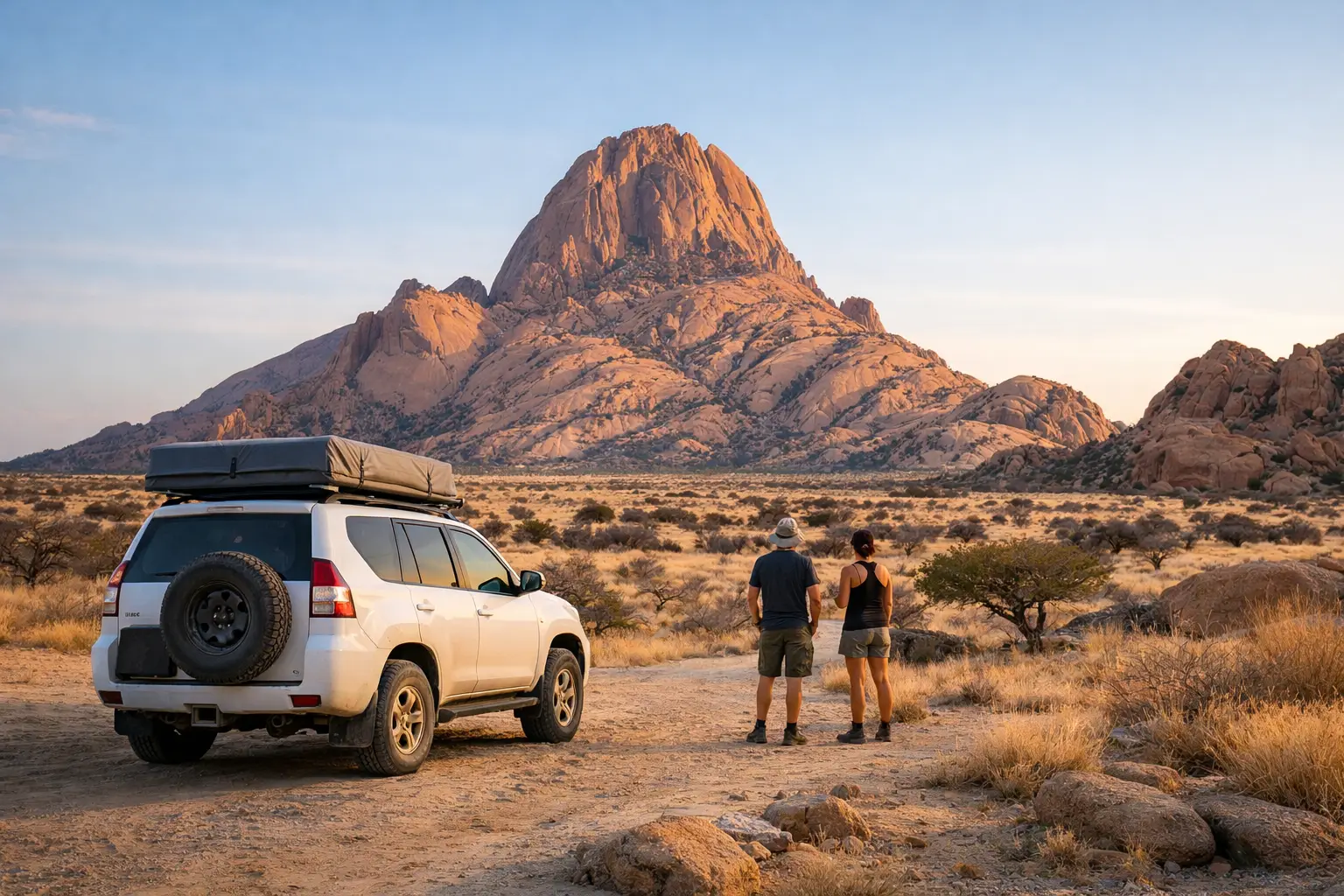
Known as the Matterhorn of Namibia, Spitzkoppe is a dramatic granite mountain group rising sharply above the surrounding desert. The main peak reaches nearly 5,800 feet, but the real appeal is not just the height. It is the contrast: dark, weathered stone against pale sand, thorny desert vegetation, and an enormous blue sky.
A tour here feels less like checking off a landmark and more like entering a natural playground. There are massive boulders, narrow rock passages, viewpoints, ancient rock art sites in the wider area, and open spaces that make even a small group feel far away from the crowds.
For photographers, Spitzkoppe delivers throughout the day. Morning light brings out the warm colors in the granite. Midday reveals the hard textures and dramatic shadows. Late afternoon is the main event, when the rocks glow orange and red and the desert begins to cool. If you enjoy landscapes that look completely different every hour, this is one of Namibia’s strongest stops.
Spitzkoppe Tour Review: Guided vs. Going Alone
A self-drive visit can be rewarding if you are confident with Namibia’s distances, gravel roads, and desert conditions. It gives you freedom to set your own pace and linger at viewpoints. However, it also means you are responsible for navigation, water, tire checks, entry arrangements, timing, and deciding which areas are actually worth your limited time.
A guided Spitzkoppe trip is the better choice for travelers who want the experience to feel easy without making it passive. You still get the adventure - desert roads, big scenery, short walks, and plenty of photo stops - but someone who knows the terrain handles the logistics. That matters when your vacation days are limited and the drive itself is part of the day.
With Dominus Dune Tours, the focus is on getting travelers close to Namibia’s raw landscapes while keeping the experience practical and well organized. A knowledgeable guide can point out details that are easy to miss on your own, from the geology of the granite formations to desert-adapted plant life and the best angles for photographs.
The trade-off is simple. Independent travelers have more control over every minute, while guided guests gain local insight, less stress, and a more structured route. Neither choice is wrong. It depends on whether you prefer to manage the expedition or spend your energy enjoying it.
The Drive Is Part of the Experience
Do not think of Spitzkoppe as a quick roadside attraction. Depending on where you start, reaching it can involve a substantial drive through changing Namibian scenery. From the coast, the route moves from foggy Atlantic air and flat desert toward increasingly rugged inland terrain. From Swakopmund, the journey is often part of the appeal, with wide-open roads and a real sense that civilization is falling away behind you.
This is also why departure time matters. An early start leaves room for unhurried stops, walking, and time to take in the peaks without racing daylight. A later tour can work beautifully when built around golden-hour photography or a sundowner atmosphere, but it requires smart planning for the return journey.
Road conditions can vary with weather and maintenance. Gravel roads demand patience, especially for visitors unused to driving on loose surfaces. A guided vehicle removes that concern, while self-drive guests should avoid treating Namibia’s open roads like highways. Keep speed sensible, allow extra travel time, and make sure you have enough water, fuel, and a properly checked spare tire.
What You Actually Do at Spitzkoppe
The best tours balance scenic driving with time on foot. You are not there to sit in a vehicle all day. Expect a mix of short walks over uneven ground, stops at striking rock formations, and time to simply stand still and absorb the setting.
One of the highlights is finding the formations that reveal Spitzkoppe’s playful side. Some boulders appear balanced impossibly on one another. Others create natural windows framing the desert beyond. Rock arches and narrow corridors invite exploration, although guests should always follow their guide’s direction and stay aware of loose rock, uneven surfaces, and changing light.
The walks are generally more about terrain and scenery than technical hiking. You do not need to be an elite athlete to enjoy them, but sturdy closed-toe shoes are a smart choice. Sandals can be fine for relaxed camp time, yet they are not ideal for scrambling over warm granite or walking on rough ground.
A strong guide also adds context. Spitzkoppe’s rock is extremely old, shaped over millions of years by wind, temperature shifts, and erosion. The landscape may look empty at first glance, but it supports hardy life adapted to low rainfall and severe temperature changes. Knowing what you are looking at makes the place feel more alive.
Is It Suitable for Families and Beginners?
Yes, with realistic expectations. Spitzkoppe is a great option for families, couples, friend groups, and first-time desert visitors because the adventure can be adjusted to the group. You can enjoy dramatic views without committing to a demanding all-day hike.
Parents should keep a close eye on younger children around rock edges and climbing areas. The terrain is natural and unguarded, which is exactly part of its appeal, but it is not a place to let kids run far ahead. Bring sun protection, water, snacks, and layers for changing conditions.
For older travelers or anyone with limited mobility, communicate your needs before booking. Many viewpoints and photo stops can be enjoyed with minimal walking, but some of the most memorable formations require uneven footpaths. A private trip may offer the most flexibility if your group wants to choose a gentler pace.
When to Go for the Best Experience
Spitzkoppe can be visited year-round, but the feel of the trip changes with the season. Cooler months are especially comfortable for walking and spending long periods outside. Summer can bring intense heat, so early morning and late afternoon become more valuable.
Golden hour is the time many travelers remember most. The low sun gives the granite a deep, fiery color while shadows add shape to every ridge and boulder. If photography is high on your list, tell your operator in advance. A good itinerary can be built around the light rather than forcing you to see the best locations at the harshest time of day.
Cloudy weather is less common but can be spectacular. Storm clouds over Spitzkoppe create a moody, cinematic scene, while clear nights open up outstanding stargazing possibilities. Desert weather is never something to take casually, though. Conditions can shift quickly, and guides may adjust plans when safety requires it.
What to Bring on a Spitzkoppe Tour
Pack for exposure, not luxury. The desert sun is serious, even on cooler days, and the granite can radiate heat. Bring a refillable water bottle, sunscreen, a hat, sunglasses, and a light jacket for early mornings or late returns. Closed-toe shoes with grip will make the walks more comfortable.
A camera or fully charged phone is essential, but do not spend the entire trip looking through a screen. Spitzkoppe rewards the moments when you put the camera down and listen to the wind move through the rocks. If you use a drone, check rules and permissions before bringing it. Sensitive natural and cultural landscapes deserve respect.
Also bring an adventurous attitude, but leave risky improvisation behind. Do not climb beyond your ability, wander off established areas, or remove anything from the landscape. This is a place that has lasted for millions of years. The goal is to enjoy it hard and leave it exactly as wild as you found it.
Is a Spitzkoppe Tour Worth It?
For travelers who want Namibia beyond the usual viewpoints, absolutely. Spitzkoppe has the visual impact of a major landmark but still feels wild, remote, and personal. It works particularly well as part of a desert-focused itinerary that includes the coast, dunes, and other big landscapes.
The experience is best for people willing to trade a little comfort for something more real: dusty roads, hot rocks, wide horizons, and the kind of silence that makes the day feel bigger than a standard sightseeing stop. Book a route that gives you time to slow down at the formations, ask questions, and stay through the best light. That is when Spitzkoppe stops being a picture and becomes a memory that lasts a lifetime.