Namibia is not a country you rush through with a tight schedule and a half tank of fuel. The top scenic drives in Namibia are part road trip, part expedition: gravel plains that run to the horizon, mountain passes with no traffic in sight, red dunes that swallow the road, and a wild Atlantic coast where fog meets desert.
For adventure travelers, the best routes are not simply about getting from one lodge or town to the next. They are where the action happens. A capable vehicle, a little preparation, and the confidence to stop when the view demands it can turn a transfer day into one of the biggest memories of the trip.
1. Walvis Bay to Sandwich Harbour
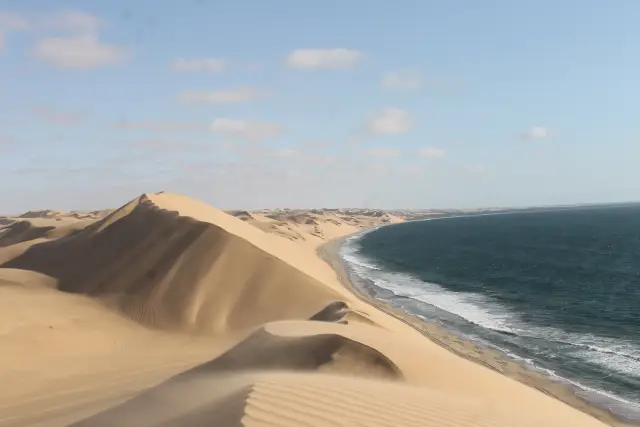
This is one of Namibia's most dramatic drives because the landscape refuses to follow the rules. On one side, the Atlantic Ocean crashes against the beach. On the other, enormous dunes rise straight from the coast. In the right conditions, you can stand between the sea and towering sand walls with almost no sign of civilization around you.
The route is not a casual self-drive beach cruise. Tides, soft sand, changing dune faces, and coastal fog can make conditions challenging fast. Much of the true Sandwich Harbour experience involves technical dune driving, and attempting it without local knowledge can leave even experienced 4x4 drivers stuck in a bad place.
A guided trip is the smart choice for most visitors, especially if you want to enjoy the scenery instead of watching a tire-pressure gauge all day. With Dominus Dune Tours, travelers can experience the steep climbs, sweeping dune ridges, and coastal viewpoints with a guide who knows how the terrain changes. It is high-energy, photogenic, and unforgettable.
2. The C14 Through Kuiseb Canyon to Sossusvlei
If you want a classic Namib Desert road trip, the C14 is hard to beat. This gravel route connects the coast to the Sossusvlei region and carries you through wide-open desert, the rocky drama of Kuiseb Canyon, and some of the most isolated scenery in southern Africa.
The landscape changes constantly. One moment you are crossing pale, stony plains; the next, the road winds through a canyon where dark rock cliffs rise above the dry riverbed. Further inland, the terrain opens again, growing warmer and redder as you approach the dunes of the Namib-Naukluft area.
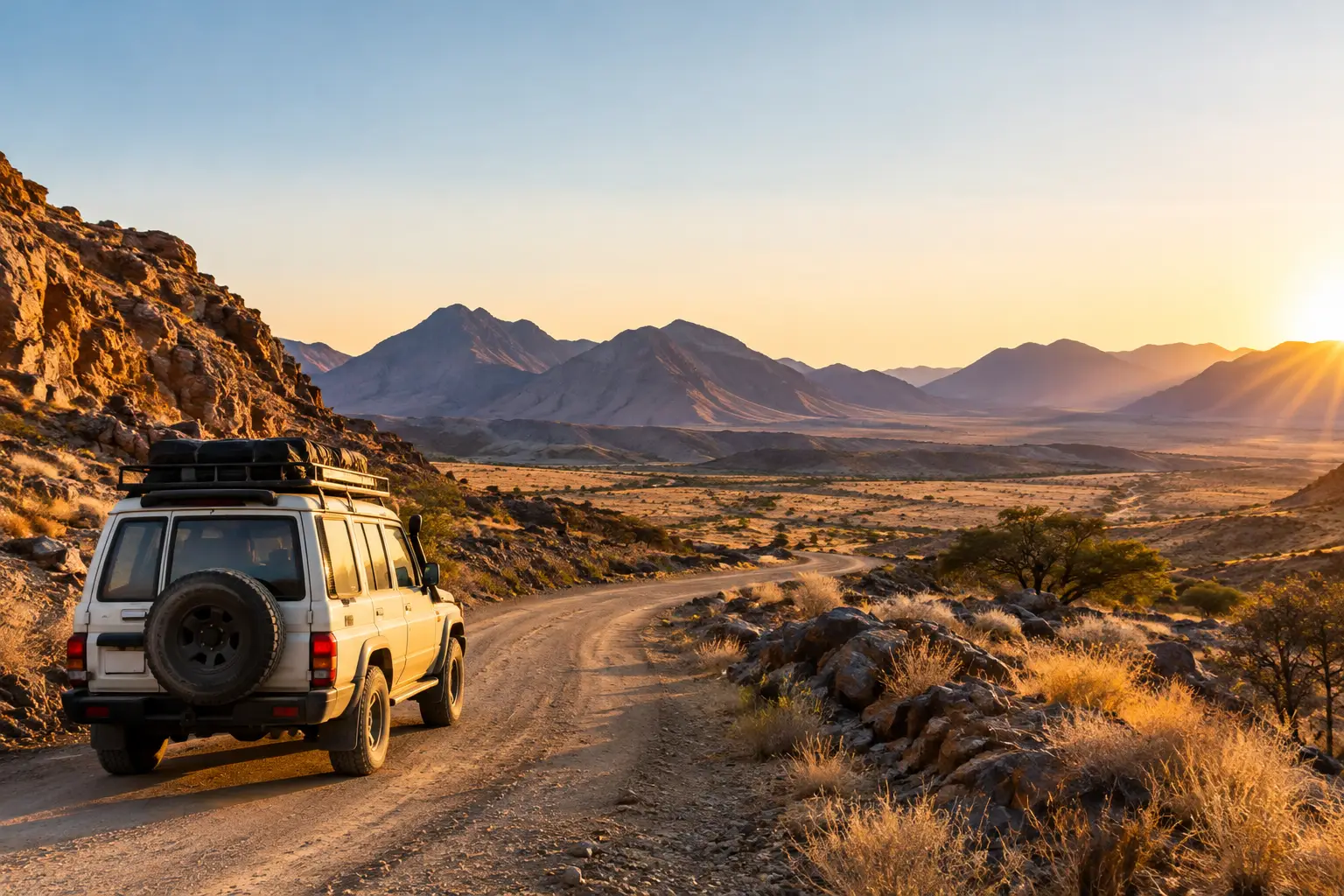
This is a route for drivers who enjoy the journey as much as the destination. The surface can be corrugated, so keep speeds sensible and give yourself more time than a map suggests. A sedan can manage sections when roads are dry and well maintained, but a high-clearance vehicle makes the drive more comfortable and offers better flexibility.
The final push into Sossusvlei
Once you enter the Sossusvlei area, the scenery shifts from vast to surreal. The paved and gravel approach is straightforward, but the final sandy stretch toward Deadvlei and Sossusvlei may require a 4x4. Soft sand catches out drivers who brake too hard, stop on an incline, or enter with insufficient momentum.
If you are not confident in sand, park at the 2WD point and use the shuttle option. If you want to build real dune-driving skills before heading farther into Namibia, a professional lesson is a far better investment than an avoidable recovery bill.
3. The D707 Along the Namib's Red Dune Edge
The D707 is the kind of road that makes people pull over repeatedly, even when they promised themselves they would make good time. Running along the eastern edge of the Namib Desert between the Aus and Sesriem regions, it delivers long sightlines, red dune fields, dry grasslands, and distant mountains in every direction.
This route is especially strong in the early morning or late afternoon, when low sunlight brings out the copper, orange, and deep red tones in the sand. It is less technical than a dune route, but that does not make it a road to underestimate. It is gravel, it can be rough, and wildlife can appear without warning.
The D707 works beautifully for couples, photographers, and self-drive travelers who want big desert scenery without committing to difficult off-road terrain. Pack water, fuel up before leaving the main towns, and resist the urge to race the sunset. Namibia's roads are at their best when you leave enough daylight for the unexpected stop.
4. Swakopmund to Moon Valley and Goanikontes
Just outside Swakopmund, the desert becomes strange in the best possible way. The drive toward Moon Valley and Goanikontes takes you into a barren, folded landscape shaped by ancient geology, dry river courses, and wind-carved rock. It feels completely different from the soft, rolling dunes closer to the coast.
Moon Valley is famous for its rugged, otherworldly look. Depending on your route and the condition of the tracks, you may encounter steep rocky sections, loose surfaces, and narrow passages that reward careful vehicle placement. This is where local guidance adds real value. The best viewpoints are not always obvious from the main road, and the desert has a way of making every track look more certain than it is.
For travelers based in Swakopmund or Walvis Bay, this is an excellent half-day adventure. Combine it with a guided dune drive or sundowner experience and you get a full dose of Namibian desert action without spending all day behind the wheel.
5. The Welwitschia Drive Near Swakopmund
The Welwitschia Drive is less about speed and more about looking closely. This route in the Namib-Naukluft Park introduces you to one of the world's most remarkable desert plants: Welwitschia mirabilis. Some specimens are believed to be well over a thousand years old, surviving with only two leaves that grow throughout the plant's life.
The landscape is stark, rocky, and quiet, with geological formations and desert-adapted life hiding in plain sight. It is a refreshing contrast to Namibia's headline dunes because it shows how much life and history can exist in a place that initially looks empty.
Check permit requirements and road conditions before setting off, as access rules can change. This is also a route where stopping only in designated areas matters. The desert crust is fragile, and a single careless tire track can remain visible for years.
6. The C28 and Bosua Pass to Windhoek
For a dramatic route between the coast and Windhoek, the C28 delivers high desert views, mountain scenery, and a genuine sense of remoteness. Bosua Pass is a standout section, climbing through rugged terrain with broad views over the Khomas Hochland.
This is not the fastest way to travel, and that is exactly the point. The road can be narrow, steep, and rough in places, particularly after rain. Drivers should be comfortable on gravel and prepared for changing visibility, loose stones, and long stretches without services.
Choose this route when you have time, a suitable vehicle, and an appetite for scenery that feels far removed from the standard highway experience. Skip it if you are arriving on a late flight, driving after dark, or working with a strict schedule. Namibia rewards patience, not pressure.
7. Spitzkoppe's Granite Desert Roads
Spitzkoppe rises abruptly from the surrounding plains, a cluster of granite peaks often called the Matterhorn of Namibia. The roads around it are not about covering distance. They are about approaching the mountains slowly as their shape changes with every mile.
The drive is especially powerful late in the day, when the granite glows gold, rust, and pink. Rock arches, boulder fields, and open desert campsites create a setting that feels made for adventure travelers with cameras, hiking shoes, and a cooler packed for sunset.
A guided trip can help you make the most of the area, particularly if you want to combine scenic driving with local stories, safe route choices, and the best light for photos. The terrain is accessible, but it is still desert country. Carry drinking water, avoid driving off established tracks, and never assume mobile coverage will be available.
8. The Skeleton Coast Road North of Swakopmund
The road north from Swakopmund toward Henties Bay, Cape Cross, and the Skeleton Coast trades red dunes for something colder and wilder. The desert presses toward the ocean while fog rolls in from the Atlantic, creating a moody landscape of salt air, shipwreck stories, windswept beaches, and empty horizons.
Cape Cross is a worthwhile stop for its enormous Cape fur seal colony. The smell is part of the experience, and so is the noise. Farther north, the road becomes increasingly remote, and the feeling of being at the edge of the map grows stronger.
This is usually an easier drive than the deep-sand routes near Sandwich Harbour, but conditions still matter. Fog can reduce visibility dramatically, wildlife may cross the road, and fuel stops become less frequent as you head north. Keep your headlights on in low visibility and do not rely on a phone signal as your backup plan.
Before You Take on Namibia's Scenic Roads
The best vehicle depends on your route. A standard rental is often enough for maintained paved roads and many dry gravel stretches, while a 4x4 is the better choice for Sossusvlei sand, remote passes, and any itinerary built around dune country. More important than the badge on the vehicle is how you drive it: lower your speed on gravel, increase following distance, avoid nighttime travel, and inspect tires at every fuel stop.
Always carry more water than you think you need, plus a paper map or offline navigation, a charged phone, sun protection, and enough fuel for a detour. Let someone know your intended route when heading into remote areas. If rain is forecast, ask locally about road conditions instead of trusting yesterday's plan.
Pick the drive that matches your confidence, not just the photo you want. Then give it the time it deserves. In Namibia, the road is rarely just the way to the adventure. It is often where the adventure begins.