
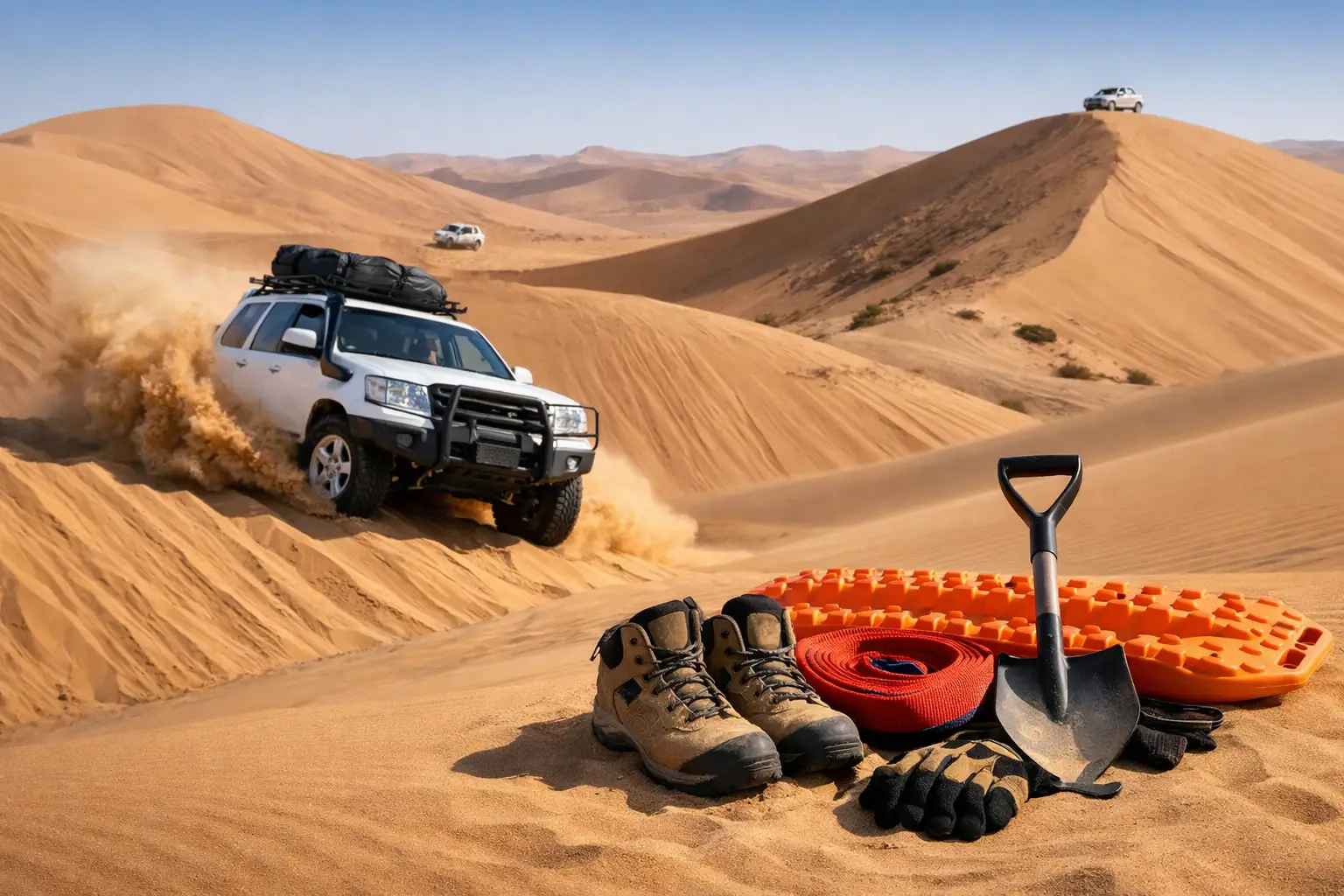
A dune can look like an open invitation from the bottom, then turn into a steep, soft-sided drop at the crest. That contrast is exactly why smart 4x4 dune safety tips matter in Namibia. The desert delivers epic views, huge adrenaline, and memories that last a lifetime, but it rewards drivers who respect the terrain, read the sand, and know when to stop.
Dune driving is not about charging at every slope. It is about controlled momentum, clear communication, and choosing a line that gives both the vehicle and its passengers room to recover. Whether you are heading into the coastal dunes near Walvis Bay, exploring Langstrand, or building confidence during a dune-driving lesson, these habits will help keep the adventure on track.
4x4 Dune Safety Tips Start Before You Reach the Sand
1. Use a real 4x4 and know its controls
A vehicle with high clearance and proper four-wheel drive is the starting point, not a guarantee. Before entering soft sand, make sure you know how to engage 4H, select low range when needed, switch off traction control if it is preventing wheel momentum, and use hill descent control if your vehicle has it.
Every model behaves differently. Do not wait until you are halfway up a dune to search for drive-mode buttons or discover that the transfer case has not engaged. Stop on firm, level ground first. If you are in a rental, ask the supplier for a hands-on explanation before leaving town.
2. Lower tire pressure for soft sand
Tire pressure can make the difference between floating across a dune face and burying the vehicle to its axles. Lower pressure increases the tire’s footprint, helping it stay on top of loose sand rather than digging down.
The right pressure depends on your vehicle, tire size, load, and the softness of the sand. There is no single magic number. Start with the guidance for your vehicle and conditions, and carry a reliable gauge and compressor so you can reinflate before driving back on pavement. Driving road speeds on underinflated tires can damage them, so this is not a step to skip at the end of the day.
3. Bring recovery gear and know how to use it
A recovery kit is not decoration. At minimum, carry a shovel, traction boards, a tire gauge, an air compressor, a rated recovery strap, and soft shackles or rated shackles appropriate for your vehicle. A communication device, drinking water, sun protection, and a first-aid kit belong in the vehicle too.
The key word is rated. Never attach a strap to a tow ball, bumper bracket, or any point not designed for vehicle recovery. A failed recovery connection can turn into a dangerous projectile. If you are unsure where your rated recovery points are, find them before the vehicle gets stuck.
4. Drive with momentum, not speed
Soft sand needs steady forward movement. That does not mean a flat-out approach. It means choosing the correct gear, keeping the engine in its useful power range, and avoiding sudden throttle changes that make the tires spin and dig.
Approach a climb with enough momentum to carry you upward, then ease off as you near the top. Aggressive acceleration often creates ruts, damages the route for the next vehicle, and makes a simple recovery much harder. Smooth inputs win on dunes.
5. Never crest a dune blind
This is one of the most valuable 4x4 dune safety tips for every first-time driver. The far side of a dune may be a gentle slope, a sharp drop, a hidden track, another vehicle, or a wildlife area. From the driver’s seat, you cannot assume.
Slow down before the crest and approach it straight. If visibility is poor, stop short and walk up to inspect the other side, or use a spotter who can communicate clearly. A dune ridge is not a finish line. It is a blind corner in a spectacular landscape.
Read the Sand, the Slope, and the Conditions
6. Go straight up and straight down steep dunes
On a steep face, keep the vehicle aligned with the slope. Traversing across a sharp dune at an angle increases the risk of sliding sideways or rolling, especially where sand is loose or the dune face is cut up by earlier tracks.
If the climb fails, do not force it with wheelspin. Ease off, reverse carefully down your existing tracks if it is safe, reduce pressure further if appropriate, and reassess the line. Sometimes the smart call is simply to choose a different route.
7. Use controlled braking on descents
A descent can feel more intimidating than a climb because gravity is now working with you. Select low range before committing to a steep drop, use engine braking, and keep the wheels pointed straight. Brake gently and smoothly if needed.
Avoid slamming on the brakes or turning sharply down the slope. Sudden inputs can make the vehicle slide, especially on soft, powdery sand. If your vehicle has hill descent control, understand how it behaves before relying on it on a major dune.
8. Watch the color and texture of the sand
Not all sand drives the same. Dry, pale, loose sand can be extremely soft. Damp sand near the coast may offer more grip, while wind-blown ridges can hide deep pockets that swallow speed fast. Fresh tracks are helpful clues, but they are not proof that your vehicle will handle the same route under the same conditions.
Coastal desert driving adds another layer of caution. Fog can erase visibility quickly, and tide schedules matter wherever dunes meet the Atlantic. A beautiful route can become unsafe when the water rises or landmarks disappear. Check conditions before departure and never gamble with a closing beach corridor.
9. Keep a safe gap between vehicles
Traveling with another capable 4x4 is far safer than going alone, but a convoy only works when drivers leave space. On climbs and descents, keep enough distance that the vehicle ahead can stop, reverse, or recover without you becoming part of the problem.
Use radios where possible, agree on simple signals, and designate an experienced lead vehicle. Do not follow the driver ahead so closely that you lose the chance to choose your own line. Sand changes after every pass.
10. Turn around early when conditions change
The desert does not care about the plan you made at breakfast. Wind can soften a route, fog can close in, heat can tire drivers, and a mechanical issue can turn a short outing into a long recovery. Confidence is useful. Stubbornness is not.
Set a turnaround time, monitor fuel, and leave a generous margin for the return journey. If you are not certain of the route, visibility, or your vehicle’s capability, stop and reassess. Calling it early protects the rest of the trip.
Keep People Safe, Not Just the Vehicle
11. Secure passengers and keep everyone seated
Dune driving changes vehicle angles quickly. Everyone should wear a seat belt, keep arms and cameras inside the vehicle, and remain seated while the vehicle is moving. Children need appropriate restraints, and passengers should know not to distract the driver during climbs, crests, or descents.
Brief your group before the first dune. Explain that the best views come with planned stops, not by standing up or leaning out during a moving run. A quick safety chat lets everyone enjoy the thrill with far more confidence.
12. Let local experience lead the way
A GPS route cannot show every soft patch, tide line, or wind-shaped ridge. Local guides know how Namibia’s dunes shift, where access is appropriate, and how to match the route to the group’s confidence level. That is especially valuable for beginners, families, and self-drive travelers who want the excitement without learning every lesson the hard way.
Dominus Dune Tours can pair the rush of a real dune experience with experienced guidance, practical safety support, and terrain knowledge that makes a massive difference when conditions change. You still get the big climbs, dramatic ridgelines, and unforgettable desert views. You get them with a team that knows what is beyond the next crest.
The best dune day is not measured by how close you came to getting stuck. It is measured by the tracks you leave behind, the views you earn safely, and the confidence to look at the next dune and say, let’s go.