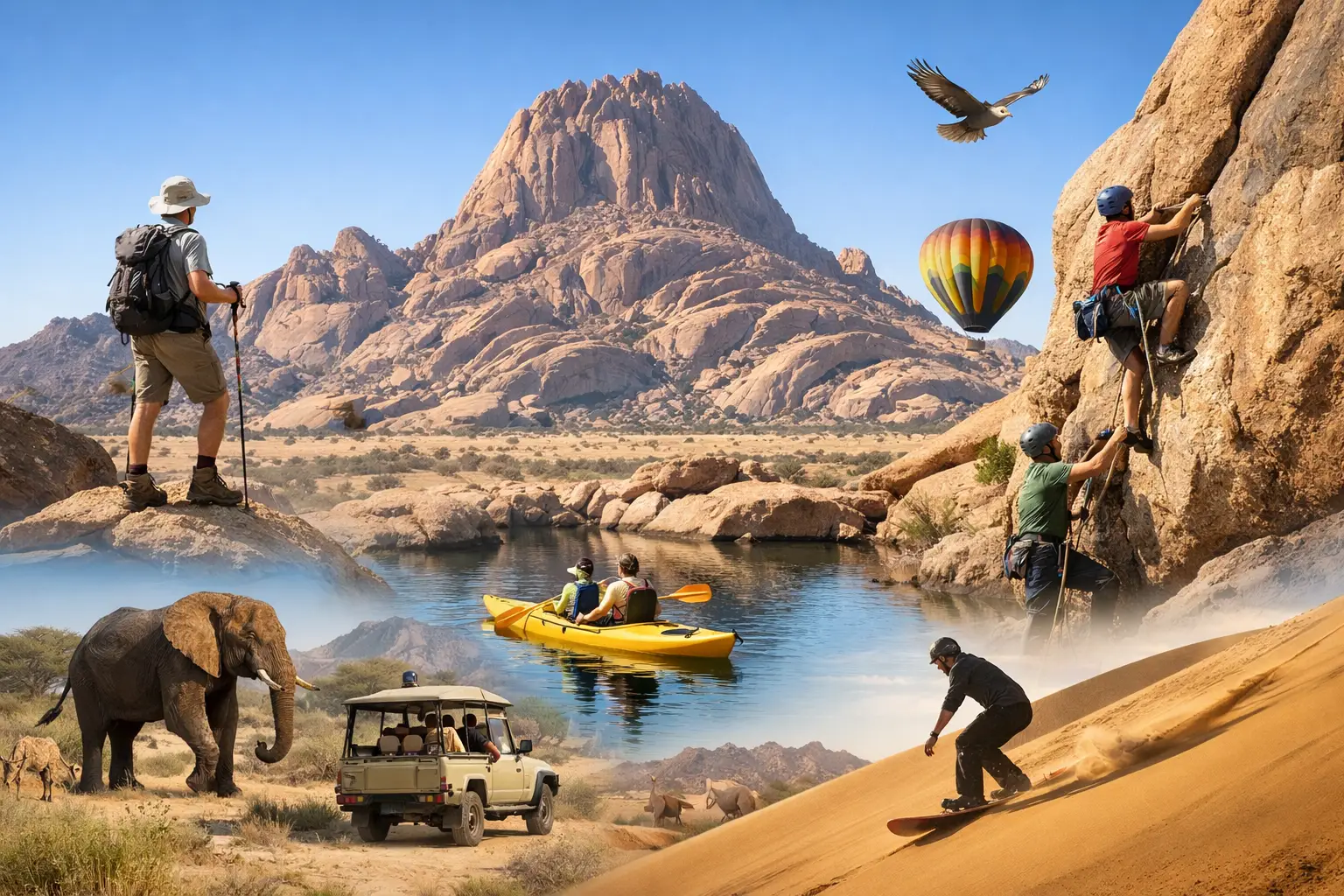
Spitzkoppe does not need a dramatic introduction. Its granite peaks rise straight out of Namibia's open desert, creating a landscape that feels raw, remote, and almost unreal. The best activities near Spitzkoppe put you right in that scenery - climbing over ancient boulders, following desert tracks in a 4x4, watching the rocks turn red at sunset, and sleeping beneath a sky packed with stars.
This is not a destination for rushing through with one photo stop. Give Spitzkoppe time. The mountain, often called Namibia's Matterhorn, rewards travelers who get out of the vehicle, take the rougher road, and stay until the light changes.
1. Hike Among the Granite Domes
A hike around Spitzkoppe is the simplest way to feel the scale of the place. The mountain is surrounded by rounded granite boulders, narrow gullies, natural arches, and viewpoints that seem to appear without warning. Many of the best walks begin close to the campsite area, where you can choose anything from a short scramble to a longer wander through the rock formations.
You do not need to be an expert climber to enjoy the terrain, but sturdy shoes matter. Smooth granite becomes slippery with loose sand underfoot, and the heat can build fast by late morning. Start early, carry more water than you think you need, and avoid trying to conquer steep, unmarked routes alone.
The reward is total freedom of perspective. From higher ground, the desert plains stretch toward distant mountain ranges, while the granite below forms a maze of shadows and shapes. It is one of those rare places where even a short hike feels like a real expedition.
2. Drive the Desert in a 4x4
The roads around Spitzkoppe are part of the adventure. Gravel tracks, sandy sections, and open desert routes connect the mountain with the wider Erongo region and Namibia's dramatic central coast. For confident self-drive travelers, this is a chance to trade highway miles for an off-road experience with huge scenery and very little traffic.
A 4x4 is strongly recommended if you plan to venture beyond the main access roads. Conditions change after rain, soft sand can catch out inexperienced drivers, and remote terrain is not the place to learn recovery techniques through trial and error. If you are newer to dune or sand driving, go with a guide or take a dune driving lesson before tackling more demanding sections.
A guided 4x4 trip adds another layer to the experience. You get local route knowledge, practical safety support, and access to terrain that is easy to miss when you are navigating on your own. Dominus Dune Tours can help adventurous travelers combine Spitzkoppe's granite landscapes with Namibia's bigger desert-driving experiences.
Guided or self-drive: which is better?
It depends on what you want from the day. Self-driving suits travelers with a capable vehicle, off-road confidence, and time to move at their own pace. Guided travel is the smarter choice if you want to focus on the scenery, learn about the terrain, or avoid the stress of route planning and vehicle recovery. Both can be unforgettable, but desert driving always deserves respect.
3. Find the Famous Rock Arch
Spitzkoppe's natural rock arch is one of the region's classic photo spots, and for good reason. The opening frames the desert beyond it, especially beautifully during the soft light of early morning or late afternoon. The arch is easy to admire, but it is far more impressive when you slow down and explore the surrounding boulders rather than treating it as a quick roadside stop.
Photographers should arrive before the strongest midday light. Granite can look flat and pale when the sun is directly overhead, while sunrise and sunset bring out deep orange, pink, and purple tones in the rock. A wide-angle lens helps, but a phone camera can capture excellent images if you use the arch to create a strong frame around the horizon.
Be patient here. Popular viewpoints can draw other visitors, particularly in peak travel months. A little waiting often gives you the quiet frame and clean photo you came for.
4. See Ancient Rock Art at Bushman's Paradise
Spitzkoppe is not only a landscape of stone. It also carries traces of people who lived and traveled here long before modern roads reached the area. Bushman's Paradise contains San rock paintings that offer a powerful human connection to this seemingly empty desert.
Visit respectfully and follow the rules at the site. Do not touch the paintings or climb around protected areas for a better angle. These images have survived for thousands of years in a harsh environment. Keeping your distance is a small effort that helps protect a remarkable part of Namibia's cultural heritage.
A local guide can bring useful context to the experience, explaining the animals, symbols, and traditions connected with the art. Even without a long history lesson, standing beneath the sheltering rock and seeing the paintings in person makes the place feel far bigger than a museum display.
5. Watch a Spitzkoppe Sunset
Sunset is when Spitzkoppe earns its reputation. The dark granite catches the last light, colors deepen across the plains, and the heat of the day finally loosens its grip. Whether you are perched on a boulder near camp or enjoying a quiet drink from a lookout point, this is the moment to stop moving.
Bring a warm layer even if the afternoon felt hot. Desert temperatures can drop quickly after the sun disappears, particularly in winter. Bring a headlamp, too, because the walk back to camp over uneven granite is very different after dark.
For couples, a private sundowner setup turns the view into a special occasion. For families and friend groups, it is simply a perfect excuse to sit together, share snacks, and watch one of Namibia's boldest landscapes change color by the minute.
6. Camp Under an Unfiltered Night Sky
Camping near Spitzkoppe is one of the best ways to experience the destination properly. The campsites are spread through the boulders rather than lined up like a typical campground, giving many visitors a stronger sense of space and privacy. Wake up with the mountain outside your tent, make coffee in the cool morning air, and start exploring before day visitors arrive.
The biggest advantage comes after dark. With almost no light pollution, the stars are intense. On a clear night, the Milky Way becomes an obvious band across the sky, not a faint suggestion. Astrophotographers will want a tripod and a camera with manual settings, but anyone can enjoy the show by simply lying back on a camp chair.
Come prepared. Bring enough drinking water, food, fuel, and a way to manage your trash. Remote camping is part of the appeal, but that means services are limited. Good preparation keeps the experience fun instead of frustrating.
7. Try Bouldering and Easy Rock Scrambling
Spitzkoppe is a magnet for climbers, but you do not need ropes and advanced skills to enjoy the rocks. Plenty of low-level bouldering, scrambling, and route-finding around the base of the mountain can add excitement to a day of exploring. The granite formations invite curiosity - a narrow gap leads to a hidden chamber, a short climb reveals a new valley, and a smooth slab becomes a front-row seat for the view.
Know where to draw the line. Technical climbing requires the right equipment, experience, and a clear understanding of local access rules. Do not attempt exposed routes because they look manageable from below. The safest adventure is usually the one that lets you walk away with great photos, tired legs, and a story worth telling.
8. Take a Scenic Day Trip Into the Erongo Region
Spitzkoppe works well as a standout stop on a wider Namibia road trip. The surrounding Erongo region offers more desert scenery, small settlements, wildlife opportunities, and fascinating contrasts between granite mountains and wide gravel plains. A day trip lets you see how dramatically the landscape shifts within a few hours of driving.
Plan fuel carefully, keep an offline map, and do not rely on finding supplies everywhere. Distances in Namibia can look manageable on a map while taking longer than expected on gravel. Build extra time into your plan, especially if you want to stop for photos, short walks, or wildlife sightings.
9. Photograph the Mountain at First Light
Sunset gets the attention, but sunrise around Spitzkoppe can be even better. The air is cooler, the campsites are quiet, and early light reveals texture across the granite before harsh shadows take over. It is also the best time for hikers and anyone hoping to see wildlife moving through the plains.
Set out while it is still dim, using a headlamp until the first color appears. Find a safe viewpoint the afternoon before so you are not scrambling over unknown rocks in the dark. Then wait. The mountain changes quickly once the sun reaches it.
10. Slow Down and Let the Desert Set the Pace
The final activity is not something you book or pack. It is the decision to leave gaps in your itinerary. Spitzkoppe is strongest when you allow time for an unplanned walk, a long coffee beside camp, or a quiet pause when the wind moves through the rocks.
That slower rhythm does not make the trip less adventurous. It makes every 4x4 track, scramble, sunset, and star-filled night land harder. Arrive prepared, respect the desert, and give Spitzkoppe at least one full day - preferably a night as well. The mountain will take care of the rest.