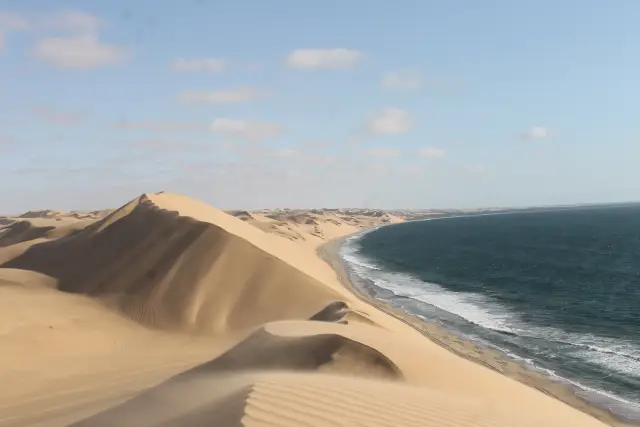
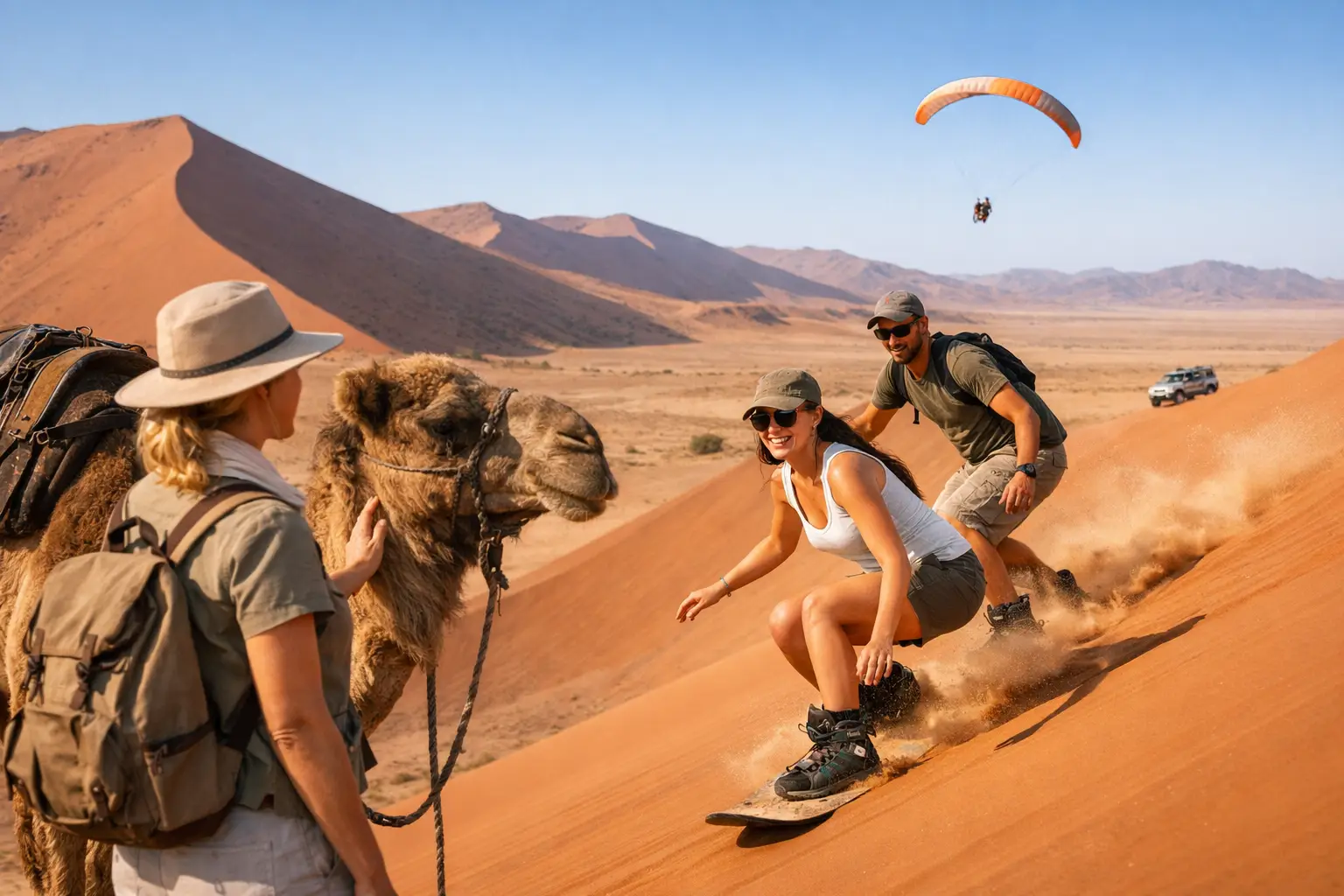
The first drop over a Namibian dune looks bigger from the top. Your stomach may do a small flip, the Atlantic wind may be blowing sand across the ridge, and then your guide points out the route below with complete calm. That is exactly why desert activities for beginners are best experienced with people who know the terrain. You get the thrill, the views, and the stories without having to guess which patch of sand will swallow a tire.
Namibia is not a place where you need years of off-road experience to have a real adventure. It is a place where first-timers can sandboard down steep faces, ride through giant dunes in a 4x4, watch the sun set over the Namib, and stand in landscapes that make ordinary road trips feel very small. The key is choosing an activity that matches your confidence, fitness, and appetite for adrenaline.
The Best Desert Activities for Beginners
Ride the dunes with a professional driver
A guided dune drive is one of the strongest first choices for anyone new to the desert. You get immediate access to terrain that is dramatic, remote, and genuinely difficult to navigate alone, while an experienced driver handles the technical work.
Around Swakopmund and Walvis Bay, the route to Sandwich Harbour is a classic example. Massive dunes run straight into the Atlantic Ocean, creating a narrow, constantly changing stretch of coastal sand. The ride can be fast, steep, and seriously exciting, but it is not a test of your driving ability. It is a chance to sit back, hold on, and enjoy one of Namibia's most epic landscapes.
Moon Valley and Langstrand dune excursions offer a different kind of desert intensity. Expect rolling sand, huge open views, and the feeling of being far from the usual tourist route. For beginners, a guided drive is also a smart way to learn why the desert demands respect. Tire pressure, momentum, route choice, changing wind patterns, and soft sand all matter here.
Try sandboarding without needing experience
Sandboarding is built for beginners. You do not need to know how to ski, surf, or skateboard before you start. A guide will show you how to position your body, control your balance, and pick the right line down the dune.
The easiest way to begin is usually lying down on a board. It is fast, simple, and full of adrenaline. Once you feel comfortable, you can try standing up. Standing runs take more balance and may include a few sandy landings, but that is part of the fun. Sand is forgiving, and most first-timers spend more time laughing than worrying about technique.
There is a trade-off: sandboarding involves walking back up dunes, which can be tough in heat and soft sand. If you want the rush but are not keen on a serious workout, ask about the pace of the session and how many runs are realistic for your group. You do not have to prove anything on your first day out.
Learn dune driving in a controlled setting
If you are renting a 4x4 or bringing your own vehicle, a dune driving lesson can turn nervous curiosity into practical confidence. This is not about racing across the desert. It is about learning the basics that make off-road travel safer: how to read a dune, when to use momentum, why tire pressure matters, and how to avoid getting stuck in the first place.
A good lesson starts gradually. You may begin on easier sand before progressing to steeper climbs and descents. Your instructor can explain what the vehicle is doing beneath you and when to make calm, decisive inputs. The goal is to leave with useful skills, not a false sense that every dune is easy.
Self-driving has a major advantage for independent travelers because it gives you more confidence for the rest of a Namibia road trip. But it also has clear limits. A lesson is not a replacement for local route knowledge in demanding areas. Remote dunes, tidal coastal sections, and unknown tracks are still best handled with a guide.
Take in the desert at sundown
Not every unforgettable desert experience needs full-throttle speed. A sundowner drive is ideal for travelers who want the atmosphere of the dunes with a gentler pace. Late light changes everything: dune faces turn deep orange, shadows stretch across the sand, and the air often becomes more comfortable after the heat of the day.
This is an especially good option for couples, families with younger children, or anyone arriving in Swakopmund after a long drive. You still get the open terrain and the excitement of a 4x4 route, but the focus is on scenery, photographs, and a moment to slow down. Bring a light jacket. Namibia's coast can feel surprisingly cool when the sun goes down.
Go beyond the coast on a guided desert trip
Beginners who have more time should consider a guided trip to bigger destinations such as Spitzkoppe or Sossusvlei. These landscapes are not just scenic stops. They are places where distance, heat, timing, and route planning shape the day.
At Spitzkoppe, massive granite formations rise from the desert floor, creating a wild setting for exploration and photography. In Sossusvlei, towering red dunes and salt pans deliver the Namibia images most travelers have dreamed about before they arrive. A two-day trip gives you more time to experience the changing light and avoids trying to cram a major desert destination into a rushed day.
For a first desert trip, guided travel removes much of the logistical pressure. You can focus on the scale of the landscape while someone else manages the practical details.
How to Choose the Right Beginner Desert Activity
Start by deciding what kind of memory you want to take home. If you want the most adrenaline, choose sandboarding or a high-energy dune drive. If you want scenery with a little excitement, a Sandwich Harbour or sundowner excursion may be the better fit. If you are planning a self-drive holiday, add a dune driving lesson before tackling sandy routes on your own.
Your group matters too. Families often enjoy guided dune drives because everyone can take part without needing special ability. Active friend groups may want sandboarding plus a dune excursion. Couples may prefer a private trip that combines dramatic scenery with a slower, more personal pace.
Be honest about motion sickness, mobility, and comfort with heights. Dune driving can involve steep angles, while sandboarding requires climbing and getting sandy. Guides can often adapt the pace, but it helps to say what you need before departure.
What to Wear and Bring for a First Desert Trip
Desert conditions change fast. Morning fog near the coast can feel cold, midday sun can be fierce, and wind can arrive without warning. Wear closed shoes with grip, comfortable clothes you can move in, sunglasses, and sunscreen. A cap or hat is useful, although secure it well if you are sandboarding or riding in an open vehicle.
Bring water even if it is provided, and keep your camera or phone protected from sand. A small cloth or sealed pouch helps. Avoid bringing loose valuables that could disappear during a fast ride or a tumble down a dune.
For a longer trip, pack these essentials:
- A light windproof layer for cool coastal weather and sunrise starts
- Sunscreen and lip balm for dry, high-exposure conditions
- A reusable water bottle and any personal medication
- Closed shoes and socks for hot sand and uneven ground
- A fully charged phone or camera with enough storage for the views
Is the Desert Safe for Beginners?
Yes, when the experience is planned properly. The desert is not dangerous because it is dramatic. It becomes risky when people underestimate heat, distance, tides, soft sand, or their own driving ability. That is why choosing an experienced operator matters.
Professional guides assess conditions before heading out and adjust routes when needed. On coastal trips, tides are a real factor. In the dunes, weather and wind can change the surface quickly. A guide knows when a slope is suitable, when a route is not, and when the best call is to turn around.
At Dominus Dune Tours, beginner experiences are designed around that balance: real adventure with clear instruction, capable vehicles, and local knowledge that helps you enjoy the terrain with confidence. Ask questions before you book. A good operator will tell you what the activity feels like, what is included, and whether it suits your group.
A Few First-Timer Questions, Answered
Do I need to be fit?
For a dune drive or sundowner, average mobility is usually enough. Sandboarding takes more energy because of the climbs, but you can set your own pace. Tell your guide if you have injuries or concerns.
Will I get covered in sand?
Probably, especially during sandboarding. It is part of the experience. On a vehicle-based excursion, you may get a little sand from wind and stops along the way, but not necessarily a full desert makeover.
Can children join?
Many guided dune activities are family-friendly, but age and suitability depend on the specific trip and conditions. Ask before booking, particularly for steeper dune drives and sandboarding.
What if I am nervous?
Start with a guided scenic drive or sundowner. Once you see how skilled drivers handle the dunes, that nervous energy often turns into excitement. You can build up to sandboarding or a driving lesson later.
The desert does not ask beginners to arrive fearless. It asks them to arrive curious, prepared, and ready to follow good advice. Pick the experience that makes your heart beat a little faster, then let Namibia do the rest.