Namibia rewards travelers who plan for distance, not just destinations. A map may make Swakopmund, Sossusvlei, Spitzkoppe, and Etosha look like easy additions to one trip, but this is a huge country of gravel roads, changing conditions, and landscapes worth slowing down for. This guide to Namibia adventure itineraries helps you build a route with proper time for dune driving, desert sunsets, wildlife encounters, and the kind of wide-open scenery that makes every long road day worth it.
The best itinerary is not the one that checks off every famous stop. It is the one that gives you enough space to actually experience Namibia: feel the sand move under a 4x4, watch fog roll in from the Atlantic, walk beneath ancient granite, and reach the dunes before the heat rises.
Start With the Right Namibia Adventure Itinerary
For most active travelers, seven to 14 days is the sweet spot. Seven days can deliver a powerful coast-and-desert route. Ten days allows you to add more time in the south or north. With two weeks, you can combine the Namib, the Skeleton Coast region, Damaraland, and Etosha without turning the trip into a constant race from one lodge or campsite to the next.
Your route should begin with the type of adventure you want most. If giant red dunes are the priority, give Sossusvlei at least two nights. If you want the most hands-on 4x4 action, base yourself around Walvis Bay and Swakopmund for Sandwich Harbour, Langstrand, sandboarding, and a dune-driving experience. If rock formations, desert roads, and quieter landscapes appeal, make room for Spitzkoppe and Damaraland.
A rental SUV can handle many main routes, but a true 4x4 is the better choice when your plans include remote tracks, sand, or self-drive exploration beyond the main roads. Even then, confidence matters more than the vehicle badge. Sand driving is not something to learn by getting stuck alone in an exposed area. A guided outing or professional dune-driving lesson gives first-timers the fun without the avoidable stress.
The 7-Day Coast and Dunes Route
This is the strongest choice for travelers who want Namibia’s headline desert scenery and adventure activities without spending every other day behind the wheel.
Days 1-2: Swakopmund and Walvis Bay
Arrive in Windhoek, collect your vehicle, and head west to Swakopmund. It is a long first drive, so many travelers prefer a night near Windhoek before continuing. Once on the coast, the pace changes completely: cool Atlantic air, German colonial architecture, vast beaches, and the Namib Desert sitting right beside the ocean.
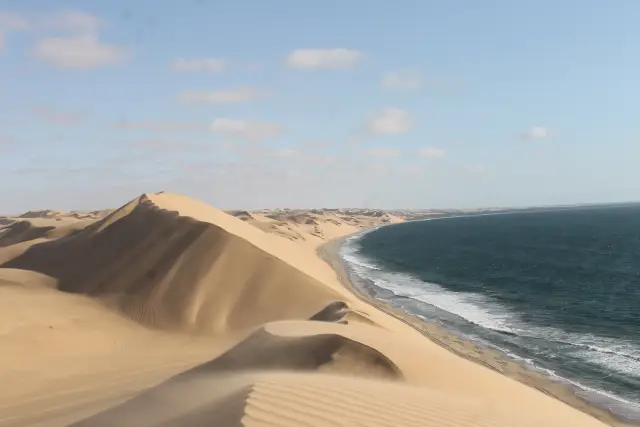
Use one day for a Sandwich Harbour excursion. This is where enormous dunes run down into the Atlantic, creating one of Namibia’s most dramatic off-road landscapes. The route changes with tides and sand conditions, which is exactly why local guidance matters. An experienced driver reads the terrain, chooses safe lines, and knows when the ocean side of the route is accessible.
On your second day, add sandboarding, a Moon Valley drive, or a sunset dune experience. Sandboarding is beginner-friendly and delivers plenty of adrenaline without requiring previous board experience. Moon Valley offers a different mood: ancient, dry, and otherworldly, with shifting light that makes the terrain feel almost lunar.
Days 3-4: Sossusvlei and Sesriem
Drive south toward Sesriem, the gateway to Sossusvlei. This is a full travel day, so leave early and do not overpack the schedule. The road itself is part of the experience, moving through open desert, mountain passes, and small settlements where services are limited.
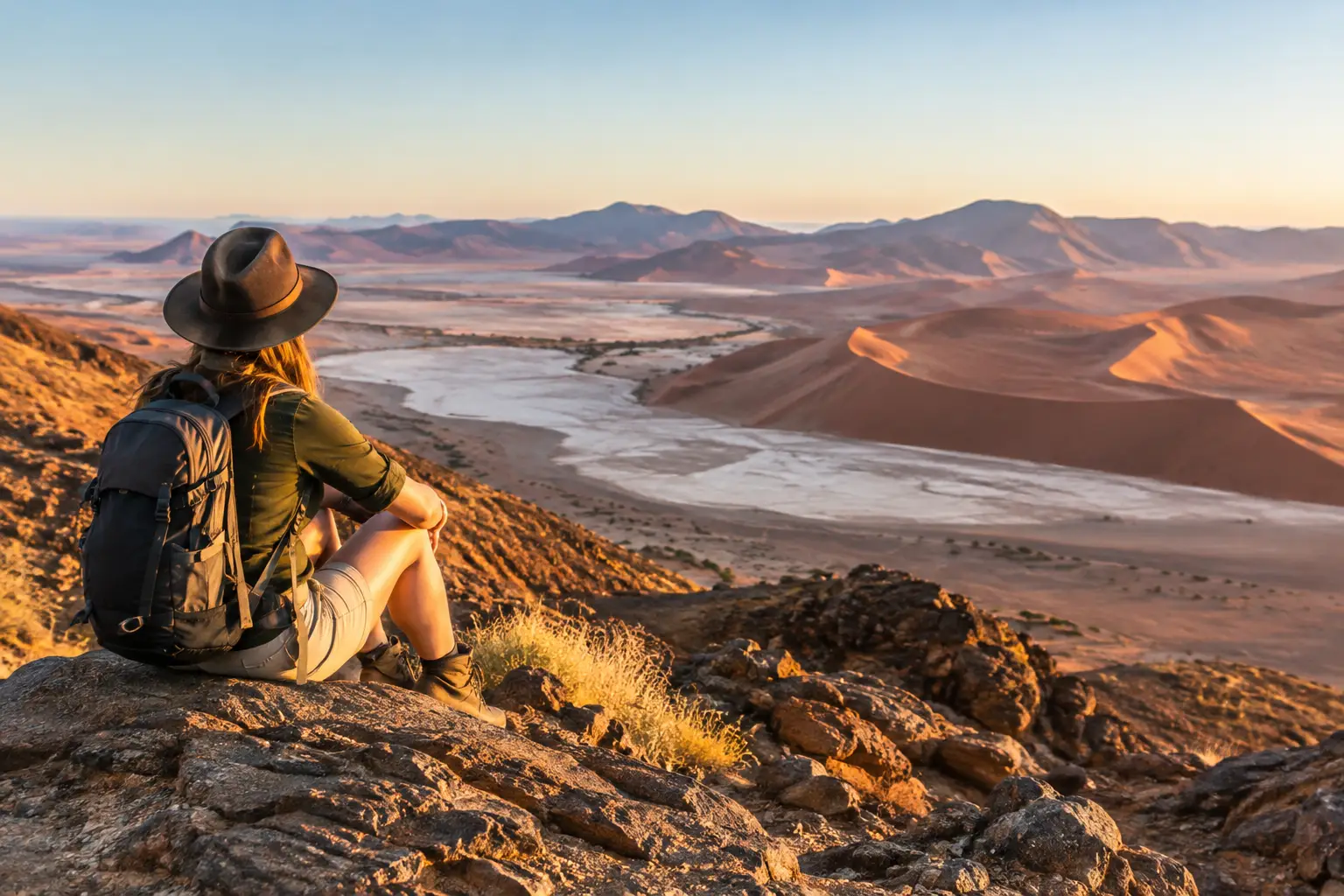
Set aside an early morning for Sossusvlei and Deadvlei. The dunes are best before midday, when the colors are deeper and the climb is less punishing. Deadvlei’s black camel thorn trees, pale clay pan, and towering orange dunes are unforgettable, but it is not a place to rush. Carry water, wear sun protection, and give yourself time to walk the final sandy section.
Spend the second day at an easier pace. Explore Sesriem Canyon, take a scenic drive, or simply enjoy a sunset over the desert. The temptation is to cram in another major destination, but a slower day here gives the trip breathing room.
Days 5-7: Return via the Central Highlands
Head back toward the central highlands, breaking up the journey with a night in a lodge, campsite, or guest farm. If your flight schedule allows, use the final night around Windhoek rather than attempting a same-day drive from the coast or Sossusvlei. Namibia is not the place to gamble on travel times after dark.
This route works well for couples, families with older kids, and first-time visitors. It combines the country’s most famous dunes with real adventure, while keeping the driving manageable.
The 10-Day Itinerary for More Off-Road Adventure
With three extra days, you can build a more varied route: Windhoek, Sossusvlei, Swakopmund or Walvis Bay, Spitzkoppe, then back to Windhoek. It adds variety without forcing an extreme loop.
After Sossusvlei, continue north to the coast and spend two nights around Swakopmund or Walvis Bay. This gives you enough time for Sandwich Harbour and a second activity, rather than having to choose between them. A private tour is especially useful for groups who want a flexible start time, family-friendly pacing, or a route focused on photography, wildlife, or high-energy dune driving.
From the coast, head inland to Spitzkoppe. These dramatic granite peaks rise straight from the desert floor and feel completely different from the soft, rolling dunes of the Namib. Guided trips are a smart option if you want local stories, the best viewpoints, and help navigating a landscape that can look deceptively simple from a distance.
Spitzkoppe is also where an itinerary benefits from staying overnight. The rock formations become even more impressive in late-afternoon light, and the night sky is exceptional. Build in time to hike, photograph, and sit still for once. Namibia’s biggest moments often happen when the engine is off.
The 14-Day Route for Desert, Rock, and Wildlife
Travelers with two weeks can go beyond the classic dunes-and-coast circuit. A well-paced route runs from Windhoek to Sossusvlei, then north to Walvis Bay and Swakopmund, onward to Spitzkoppe and Damaraland, and finally to Etosha National Park before returning to Windhoek.
Damaraland brings a tougher, more remote feel. Expect rugged valleys, dry riverbeds, wide gravel roads, and a real sense of wilderness. It is a strong fit for confident self-drive travelers, but road conditions, fuel planning, tire care, and daylight timing matter. Keep your daily distances conservative. A 250-mile day on a paved highway is one thing; the same distance on rough gravel can feel very different.
Etosha changes the rhythm again. Instead of chasing dunes and viewpoints, you slow down for wildlife. Plan at least two nights, preferably three, so you have time for early and late game drives. Elephants, giraffes, zebras, lions, and rhinos are all possible, but wildlife never works on a schedule. Patience is part of the adventure.
This longer itinerary is ideal for travelers who want Namibia’s full contrast: red dunes, Atlantic coast, desert rock, remote driving, and classic African wildlife. The trade-off is more time on the road and more moving parts, so book key accommodations early and avoid trying to add every optional detour.
Build Smart Around Weather, Roads, and Energy
Namibia is a year-round destination, but conditions shape the trip. The cooler, drier months from May through September are popular for comfortable daytime temperatures and wildlife viewing. Nights can be cold in the desert, especially around Sossusvlei and Spitzkoppe. Summer brings hotter conditions and the possibility of rain, which can transform the landscape but also affect some roads and routes.
Never plan major driving after dark. Wildlife, livestock, potholes, and reduced visibility make nighttime travel a poor gamble. Fuel up whenever you have the chance in remote areas, keep water in the vehicle, and carry a spare tire that you know how to use. On gravel, lower your speed, increase following distance, and expect the occasional loose section or washboard surface.
For dune activities, let professionals handle the technical terrain. Guided trips make the experience bigger, not smaller. You get access to routes that change with conditions, practical safety support, and a driver who can focus on the sand while you focus on the view. Dominus Dune Tours is a strong choice for travelers who want that combination of high-energy action and local desert knowledge.
Quick Questions Before You Choose Your Route
Can beginners try sandboarding and dune driving?
Yes. Sandboarding is accessible for beginners, and no previous board skills are required. Dune driving is different: it is exciting but technical, so a guided excursion or lesson is the right introduction. You can learn how momentum, tire pressure, slope angle, and safe recovery work without putting your rental vehicle in a bad situation.
Is a self-drive Namibia trip still adventurous?
Absolutely. Self-driving gives you freedom, especially between major destinations. The strongest approach is often a mix: drive the main routes independently, then book guided activities for deep sand, remote coastal routes, and specialized terrain. You stay in control of your trip without missing the places that are difficult to access safely on your own.
How much should you schedule each day?
Less than you think. One major activity or destination per day is usually enough. Namibia’s distances, heat, and landscapes deserve room. Leave time for a roadside viewpoint, a slow lunch, a flat-tire delay, or the sight of a sunset that makes you stop the car without checking the clock.
Choose the route that leaves you hungry for one more desert day, then let Namibia do what it does best: turn the space between destinations into part of the memory.