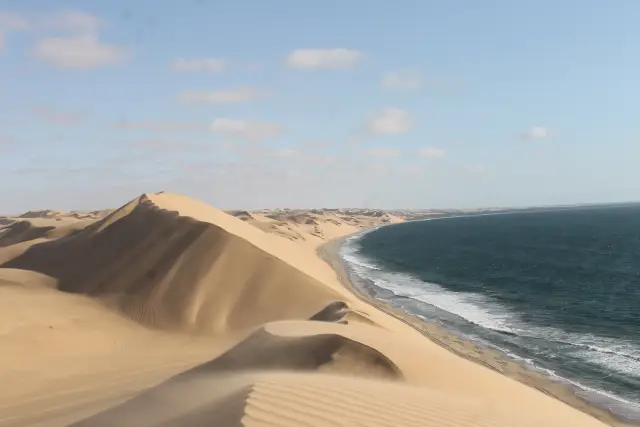
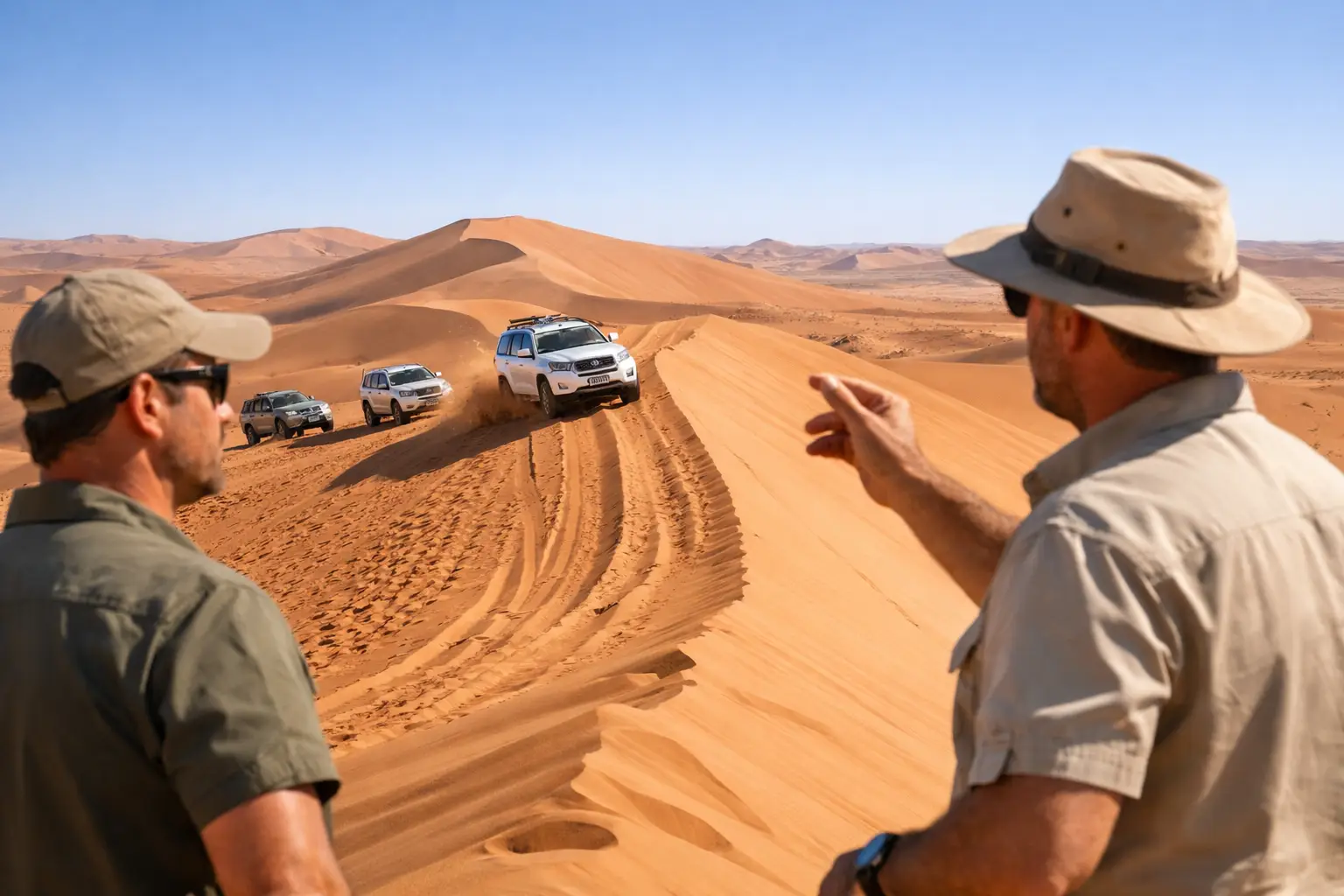
A dune can look like an open invitation from the bottom. Then the slope steepens, the sand softens, and the horizon disappears over the crest. That is exactly why guided 4x4 driver training is one of the most rewarding ways to experience Namibia. You are not just riding through spectacular terrain - you are learning how to read it, respect it, and drive it with real confidence.
For self-drive travelers, a 4x4 rental opens up a world of possibility. But desert driving is not the same as following a gravel road or crossing a muddy track at home. Sand changes by the hour, wind reshapes lines overnight, and a wrong decision on a steep dune can leave you stuck or facing the wrong direction. With an experienced local guide beside you, the learning curve becomes part of the adventure.
What Guided 4x4 Driver Training Teaches You
The best training happens where the skills are needed: on real sand, among real dunes, with changing surfaces and practical decisions at every turn. You will learn by driving, not by sitting through a long technical briefing.
Your guide starts with the foundations. That means understanding your vehicle’s 4x4 settings, knowing when to reduce tire pressure, and using momentum without charging blindly into soft sand. You will feel the difference between loose, dry sand and firmer, damp coastal surfaces. You will also learn why smooth steering, measured throttle, and looking far ahead matter more than sudden corrections.
From there, training moves into dune technique. Climbing requires enough momentum to reach the top without spinning the wheels. Descending calls for controlled braking, the right gear, and a calm approach. Traversing across a slope requires careful weight transfer and an understanding of where the vehicle wants to slide. These are skills that make sense once you feel them through the steering wheel.
A good session also covers recovery. Getting stuck is not a sign that you have failed. Even skilled drivers misjudge a patch of soft sand or lose momentum at the wrong moment. The difference is knowing how to stop safely, assess the situation, and recover without digging the vehicle deeper. You may practice reversing out of a soft section, clearing sand from around the tires, and using a controlled recovery method under guidance.
Why Learn With a Local Dune Guide?
A local guide brings more than driving knowledge. They understand the terrain, the weather patterns, the tides, the changing condition of access routes, and the places where a beautiful line can quickly become a risky one. In coastal dune areas, this knowledge is especially valuable. A route that is firm and easy in the morning can look very different later in the day.
Guided training gives you room to focus. Instead of trying to navigate unfamiliar dunes, watch your fuel level, judge every slope, and worry about getting lost, you can concentrate on the vehicle and the techniques being explained. That turns an intimidating first experience into an exciting, hands-on day outdoors.
It is also a better way to enjoy Namibia’s scenery. When you know how to position the vehicle safely and where to stop, you can take in the massive dune faces, distant Atlantic views, shifting shadows, and wide-open desert without feeling rushed. The goal is not to race across the sand. The goal is to drive with purpose and enjoy every dramatic kilometer.
Guided 4x4 Driver Training for Beginners and Self-Drivers
You do not need previous off-road experience to get started. Beginners often make fast progress because they arrive ready to listen, follow instructions, and build habits from the ground up. Training can begin on gentler slopes before moving to more challenging terrain as your confidence grows.
If you are renting a 4x4, guided instruction can be one of the smartest additions to your Namibia itinerary. Rental vehicles vary, and controls may not be familiar. Taking time to understand the vehicle before heading into sand can help you avoid expensive mistakes, unnecessary stress, and a disrupted travel plan.
More experienced drivers benefit too. Perhaps you have driven forest tracks, rocky trails, or snow, but have limited experience on dunes. Sand is its own discipline. It rewards momentum and smoothness, but punishes overconfidence. A guide can refine your approach to crests, steep descents, side slopes, and safe turnarounds in a way that a generic off-road course cannot.
The right level of challenge depends on your experience, vehicle, weather, and the day’s conditions. A family in a rented SUV may want a confidence-building introduction with scenic stops. A group of experienced self-drivers may want to sharpen skills on bigger dune lines. Both can be unforgettable when the route and instruction match the driver.
The Skills That Matter Most in Sand
Desert driving is not about forcing a vehicle through every obstacle. It is about reading the terrain early enough to make good choices. Before a climb, look at the run-up, the steepness of the face, the shape of the crest, and the exit route. Before a descent, consider what lies beyond the point you cannot see.
Momentum is essential, but it must be controlled. Too little speed and you bog down before the crest. Too much speed and you can lose control at the top. Your guide will show you how to build speed gradually, hold a steady line, and ease off at the correct moment.
Tire pressure is another major factor. Lowering pressure increases the tire’s contact area and helps it float over soft sand. But pressure should never be guessed. Too high, and the vehicle digs in. Too low, and you can risk tire damage or loss of control. Training helps you understand the practical balance for your specific vehicle and conditions.
Then there is the habit that matters most: never drive beyond what you can see and understand. A dune crest can hide a sharp drop, a soft bowl, another vehicle, or a slope that demands a different line. Slow down, assess, and take the route that gives you control.
What to Expect on the Day
A guided lesson should feel adventurous from the first minute, but never chaotic. Expect a clear introduction to your vehicle, the route, safety signals, and the conditions you will encounter. You will have time to ask questions before heading onto the sand.
As the drive progresses, instruction becomes practical and immediate. Your guide may demonstrate a technique first, talk you through it over radio communication, or ride with you to explain exactly when to steer, accelerate, and ease off. The pace should be encouraging, with enough challenge to make each successful climb or descent feel earned.
Bring water, sunscreen, sunglasses, and clothing suited to wind and sun. Desert weather can change quickly, particularly near the coast. A camera is worth having, but secure it well. You will want both hands free when the terrain gets interesting.
With Dominus Dune Tours, the experience is built around expert local guidance, epic scenery, and the practical support needed to enjoy dunes responsibly. It is an ideal choice for travelers who want more than a passenger seat and more confidence than a map can provide.
Drive for the Memory, Not the Ego
The most satisfying moment in dune driving is rarely the biggest climb. It is the point when you recognize the line, prepare the vehicle, commit smoothly, and crest the dune in control. Suddenly, the desert feels less intimidating and far more alive.
Take the lesson, ask the questions, and let the terrain teach you. Namibia’s dunes offer adventure on a grand scale, and the skills you gain will make every future off-road journey feel safer, smarter, and far more memorable.