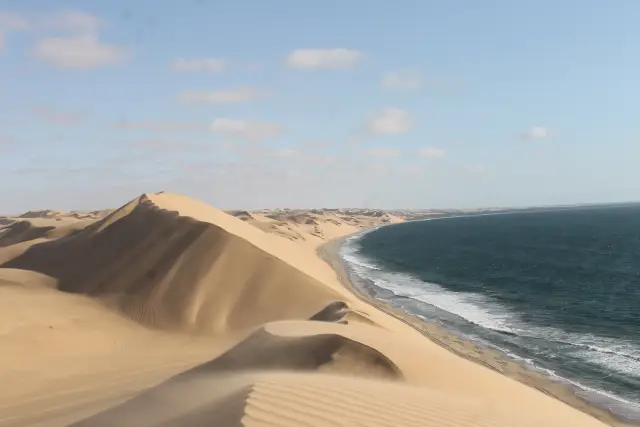
A steep orange dune outside Swakopmund looks enormous from the bottom. Then you reach the top, strap in, look down, and realize the slope is smoother than it seemed. If you are asking, “how difficult is sandboarding?” the honest answer is: easier to try than snowboarding, but still exciting enough to get your heart racing.
Most first-timers can enjoy sandboarding on their first run. You do not need to be an athlete, own special equipment, or have experience on a board. What you do need is a willingness to start small, listen to your guide, and accept that your first few meters may feel a little wobbly. That is part of the fun.
How Difficult Is Sandboarding for a First-Timer?
Sandboarding is generally beginner-friendly because sand is more forgiving than snow. A fall usually means a soft landing rather than a hard impact, and there are no lifts, icy patches, or crowded slopes to manage. Namibia’s wide, open dunes also give you plenty of room to focus on your own line.
The biggest challenge is not technical skill. It is getting comfortable with the sensation of sliding downhill on a steep face of sand. Your brain may tell you to lean backward, especially on your first run. In practice, a relaxed stance with your weight centered over the board gives you more control.
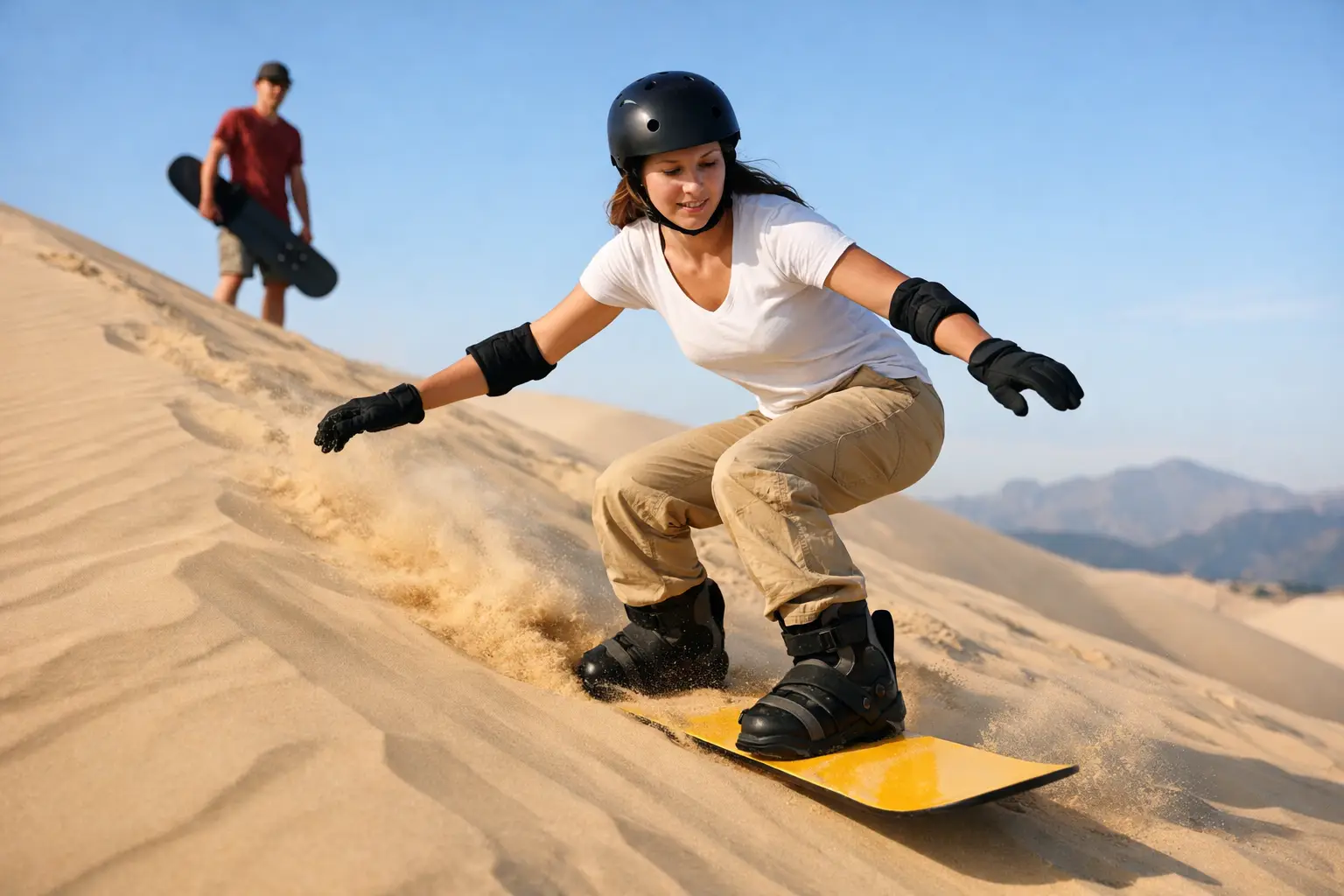
Standing sandboarding requires more balance than lying-down sandboarding. On your feet, you are learning how to edge the board, manage your speed, and keep your shoulders facing in the right direction. It can feel similar to learning the basics of snowboarding or skateboarding, but slower and less intimidating at the start.
Lying down on a board is the fast-track option for adrenaline. You hold on, keep your body low, and launch straight down the dune. There is very little technique involved, but the speed can be surprising. For many travelers, this is the moment that turns a desert day into an unforgettable story.
What Makes Sandboarding Easier or Harder?
Not every dune and every run feels the same. The difficulty depends on the slope, the sand conditions, your chosen riding style, and how confidently you approach the board.
A gentle, well-packed slope is ideal for learning. You have time to feel the board move, adjust your stance, and step off if needed. Steeper dunes create a much faster ride, particularly when the sand is dry and the board has been prepared for speed. These runs are thrilling, but they are best enjoyed after you have found your balance on something smaller.
Your fitness level matters less than people expect. You do not need strong legs to make a first run, although a little leg strength helps when riding standing up. The more demanding part can be walking back up the dune. Sand shifts beneath every step, and a short climb can feel like a serious workout under the Namibian sun.
Weather also changes the experience. Cooler morning conditions can make the climb more comfortable, while warm afternoon sand and brilliant desert light create a more dramatic atmosphere. Wind can reshape the dune surface, but experienced guides choose suitable slopes and adjust the activity to the conditions.
Standing Up or Lying Down: Which Should You Try?
For a first session, there is no rule that says you must stand. In fact, trying both styles gives you the best desert adventure.
Standing up is about balance, control, and the satisfaction of linking a few smooth turns. Begin with your knees slightly bent, your arms relaxed, and your eyes looking ahead rather than directly at the sand. Small movements work better than big corrections. If you tense up and lean too far back, the board is more likely to catch or lose its line.
Lying down is about pure speed. It is usually easier to learn because your body is low and stable, but it can feel more intense once you get moving. Keep your elbows in, grip the board securely, and follow the guide’s instructions on how to position yourself. A good run can carry you farther than expected, with sand rushing past and a huge desert view opening below.
Families and mixed-age groups often enjoy this flexibility. One person may be eager to stand and carve down the dune, while another prefers a fast prone ride. Both get the same epic setting and the same sense of achievement.
The Skills You Actually Need
Sandboarding does not demand a long lesson, but a few basics make a major difference. Your guide will show you how to position your feet, control your body, and stop safely. Pay attention before your first run, even if you are excited to get going.
For standing rides, keep your weight centered and your knees soft. Avoid locking your legs. Look where you want to travel, not at the board. If you feel unstable, lower your center of gravity by bending your knees a little more instead of throwing your arms around.
To slow down, make gentle adjustments rather than sharp movements. Sand naturally creates resistance, so you are not managing the same relentless glide you might find on hard snow. If you fall, let yourself slide or roll to a stop. Trying to fight a fall can make it more awkward.
The best skill is knowing your comfort zone. There is no prize for taking the steepest drop first. Start on a manageable slope, build confidence, and then decide whether you want more speed. Desert adventures should challenge you, not pressure you.
Is Sandboarding Safe?
With proper equipment, suitable terrain, and clear guidance, sandboarding is a safe activity for most travelers. Like any outdoor adventure, it comes with a degree of risk. You are moving downhill, the dune is steep, and the environment is remote. That is exactly why local expertise matters.
A professional operator selects an appropriate dune, checks the surface, explains the route, and gives you instructions before you ride. You should wear the supplied safety gear when offered, follow the guide’s signals, and wait until the landing area is clear before starting your run.
Desert safety also extends beyond the board. Bring water, wear sunscreen, and use sunglasses to protect your eyes from glare and windblown sand. Closed-toe shoes are usually more comfortable for climbing dunes, although sand will almost certainly find its way into them. That is simply part of the experience.
People with recent injuries, serious balance concerns, or medical conditions that make falls risky should speak up before participating. A good guide can often recommend a gentler run, a seated option, or another way to enjoy the dunes without pushing beyond what feels right.
Tips That Make Your First Run Better
Arrive ready to get sandy. Loose, breathable clothes are best, and avoid bringing anything you would hate to find covered in fine desert sand. Secure your phone and sunglasses before riding, especially if you choose the high-speed lying-down option.
Listen carefully to the short briefing, then give yourself permission to be a beginner. The first run is not about looking polished. It is about understanding the movement of the board and enjoying the view from a place few travelers reach on foot.
Do not underestimate the climb back up. Walk steadily, take breaks if needed, and drink water between runs. The reward is waiting at the top: a vast dune field, Atlantic air in the distance near the coast, and another chance to choose your line.
If you are booking a guided desert activity, ask whether the session suits beginners, whether both standing and lying-down rides are available, and what gear is included. Dominus Dune Tours makes the experience accessible for first-timers while keeping the thrill level high for travelers who want to go faster.
The Real Difficulty Is Taking the First Drop
Sandboarding is not difficult in the way people often imagine. You are not expected to arrive with perfect balance or board-sport experience. The challenge is mostly mental: standing at the top of a dune, trusting the instructions, and committing to that first glide.
Once you are moving, the fear usually turns into laughter. You may tumble, you may get sand in your socks, and you may decide that lying down is much more your style than standing up. But the desert has a way of making even a shaky first run feel like a memory worth keeping.
When you are ready to face the slope, start where you feel comfortable, keep your eyes up, and let the dune do the rest.