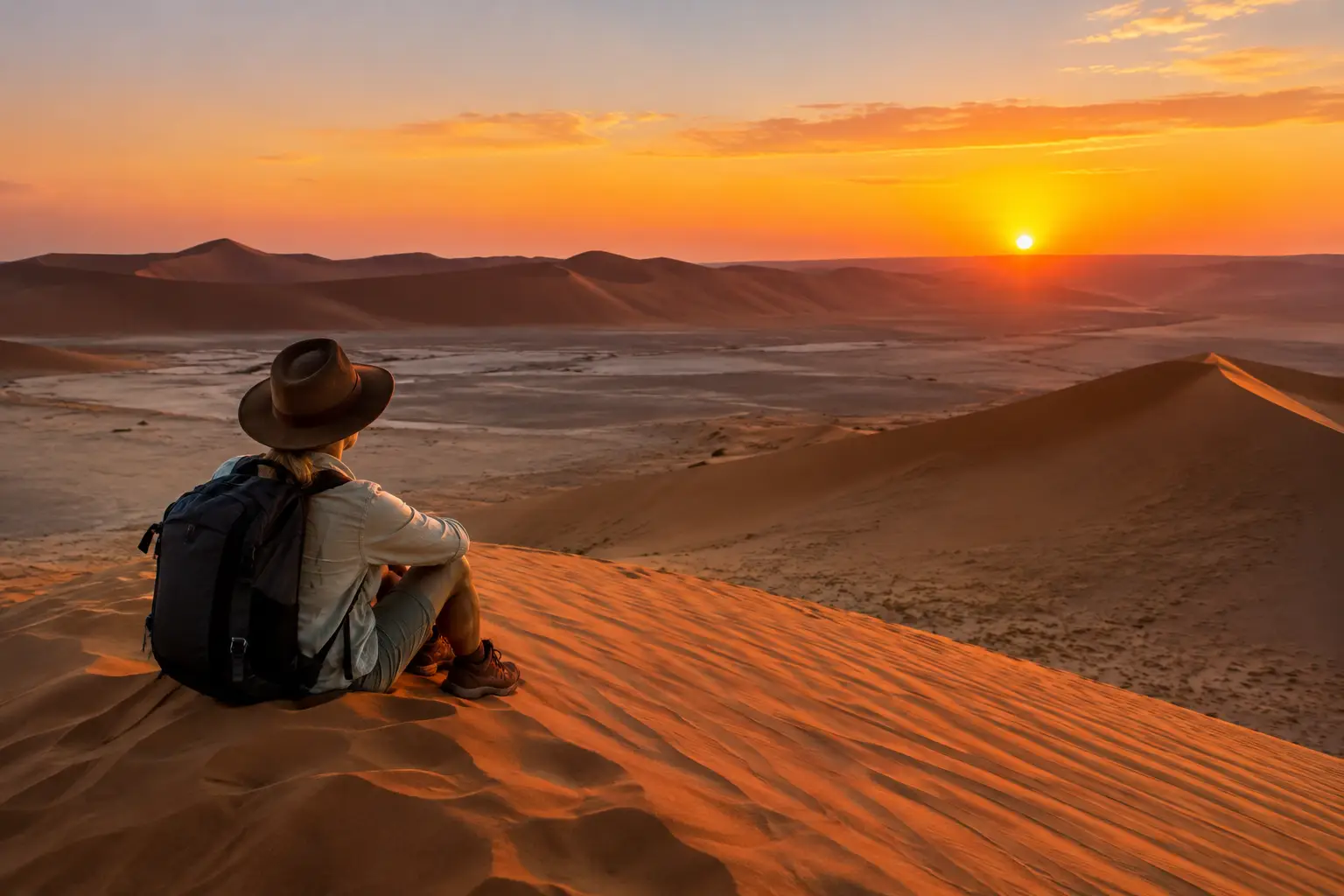
The last hour before sunset changes the Namibian desert completely. Harsh midday sand softens into deep orange, the wind settles, and long shadows carve every dune ridge into sharp relief. Knowing how to plan a dune sunset means more than arriving with a camera at the right time. It means choosing terrain you can leave safely after dark, reading the weather, and giving yourself enough time to enjoy the moment instead of racing the fading light.
A dune sunset can be peaceful, wild, romantic, family-friendly, or packed with 4x4 action. The best plan depends on where you are, who is traveling with you, and whether you have the right vehicle and desert experience. A little preparation turns an already epic view into a desert memory that lasts a lifetime.
How to Plan a Dune Sunset Without Rushing It
Start with sunset time, then work backward. In Namibia, the final colors often build 20 to 40 minutes before the sun reaches the horizon, while the afterglow can be just as spectacular for another 15 to 25 minutes. Plan to be at your viewing point at least 45 minutes before sunset, not at the start of it.
This matters even more in dune country. Sand tracks can take longer than they appear to on a map, especially if you stop for photos, lower tire pressure, navigate soft sections, or wait for another vehicle to clear a narrow route. If your sunset spot is reached by 4x4, add a generous buffer. Desert driving is never the place to chase the clock.
For a guided experience, confirm the pickup or meeting time early in the day and ask what the route includes. Some excursions focus on the view and a relaxed sundowner stop. Others combine dune driving, coastal scenery, wildlife sightings, sandboarding, or remote tracks before the sunset stop. Choose the pace that suits your group. A couple looking for quiet may want a private, scenic outing, while a group of friends may want a more action-focused ride before settling in with drinks and photos.
Choose a Viewpoint That Matches Your Adventure
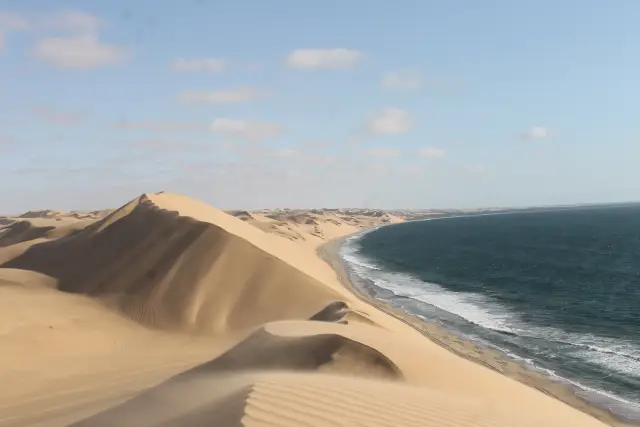
Not every dune sunset needs the same backdrop. Around the Namibian coast, the most dramatic scenes often come from the contrast of towering sand and the Atlantic. In areas such as Sandwich Harbour or Langstrand, the light can hit sweeping dune faces while mist rolls in from the ocean. It is a powerful setting, but it also demands real local knowledge because tides, soft sand, and changing tracks shape the route.
Further inland, places near Sossusvlei offer enormous red dunes and wide-open horizons. The scale is unforgettable, especially when low light brings out the ripples and ridges in the sand. Here, access rules and park gate times may affect your plan, so do not assume you can simply stay until darkness falls wherever you choose.
Moon Valley and other rocky desert landscapes create a different type of sunset. Instead of clean dune lines, expect ancient valleys, dark stone, pale gravel plains, and a huge Namibian sky. These areas are ideal if you want scenery with texture and a sense of complete wilderness.
The key trade-off is access versus isolation. A viewpoint close to town is easier for families, beginners, and anyone with limited time. A remote dune field can feel more exclusive and dramatic, but it requires more planning, proper recovery equipment, and a reliable route out. If you are not confident in sand driving, let an experienced guide handle the terrain so you can enjoy the view rather than worry about getting stuck.
Time the Weather, Tide, and Light
Desert sunsets are famous for clear skies, but conditions still matter. Wind can pick up sand and reduce visibility. Coastal fog can transform a scene into something moody and cinematic, yet it can also hide the sun entirely. A cloudless evening delivers clean colors, while scattered clouds may create the most dramatic pink, purple, and gold afterglow.
Check the forecast on the afternoon of your trip, but stay flexible. If you have more than one evening available, keep the best-looking forecast open for your dune sunset. This is especially useful along the coast, where conditions can change fast.
At Sandwich Harbour and other coastal dune locations, tide timing is not optional. The beach route can become impassable or unsafe at high tide, and water conditions change the available driving line. A professional operator plans around this every day. Independent drivers should never enter a tide-sensitive route without current local advice and a clear understanding of the exit options.
Light also affects photography. If you want portraits, arrive early enough to use the warm, low-angle light before the sun drops. For silhouettes, wait until the sun is near the horizon and place people along a dune ridge. Keep your group small and move carefully. One set of footprints can look great in a photo, but a busy slope can quickly lose its clean, untouched look.
Pack for Comfort After the Sun Drops
The desert can feel hot in the afternoon and surprisingly cold once the sun disappears. Wear layers rather than relying on one heavy jacket. A T-shirt, light long-sleeve layer, and windproof outer layer usually give you the flexibility to stay comfortable through the full color show.
Bring water even for a short trip. Add sunscreen, sunglasses, and a hat for the drive out, then keep a warm layer close by for the return. Closed shoes are a smart choice if you plan to climb dunes or walk on uneven ground. Sandals are fine for a relaxed stop, but they offer less grip on steep slopes and hot sand.
A small day bag is enough for most guests. Pack your phone or camera, a power bank, and a headlamp if you are self-driving. Avoid using your phone flashlight as your only plan for darkness. Navigation, a dead battery, or a lost device can turn a simple return drive into an unnecessary problem.
If you are bringing snacks or drinks, keep it simple and pack out every item you bring in. Desert landscapes look untouched because responsible travelers leave them that way. Glass is best avoided around moving vehicles and steep dune slopes.
Be Honest About Your 4x4 Skills
Driving on dunes is thrilling, but it is not like driving on a dirt road. Soft sand, sharp drop-offs, hidden bowls, and changing wind patterns can catch out even experienced drivers. A rental 4x4 alone does not make a driver ready for dune terrain.
If you are self-driving, know how to reduce tire pressure correctly, maintain momentum without speeding, use recovery gear, and judge safe lines before you commit. Travel with another capable vehicle whenever possible. Tell someone your intended route and expected return time, and do not drive into unfamiliar dunes after sunset.
There is no shame in choosing a guided tour instead. It often gives you access to terrain that is difficult to navigate independently, plus the confidence to enjoy the ride. Dominus Dune Tours can pair the excitement of professional dune driving with a sunset stop chosen for the conditions, your group, and the kind of experience you want.
Make the Sunset Feel Like Your Own
A great dune sunset does not need a crowded schedule. Leave room to stand quietly, watch the colors shift, and take in the scale of the desert. Put the phone away for a few minutes after taking your photos. The wind over the dunes, the changing light, and the silence are part of the experience.
For proposals, anniversaries, or small private celebrations, mention your plans when booking. A private setup may allow more flexibility around timing, photo stops, and a quieter location. Families should choose a route that matches the children’s ages and comfort level, with enough snacks, water, and warm layers to avoid a rushed return.
When the sun finally disappears, do not treat the evening as over. Stay for the last color, follow your guide or planned route back carefully, and let the desert get dark on its own terms. That final drive beneath a wide Namibian sky is often the part people talk about long after the sand has been shaken from their shoes.