
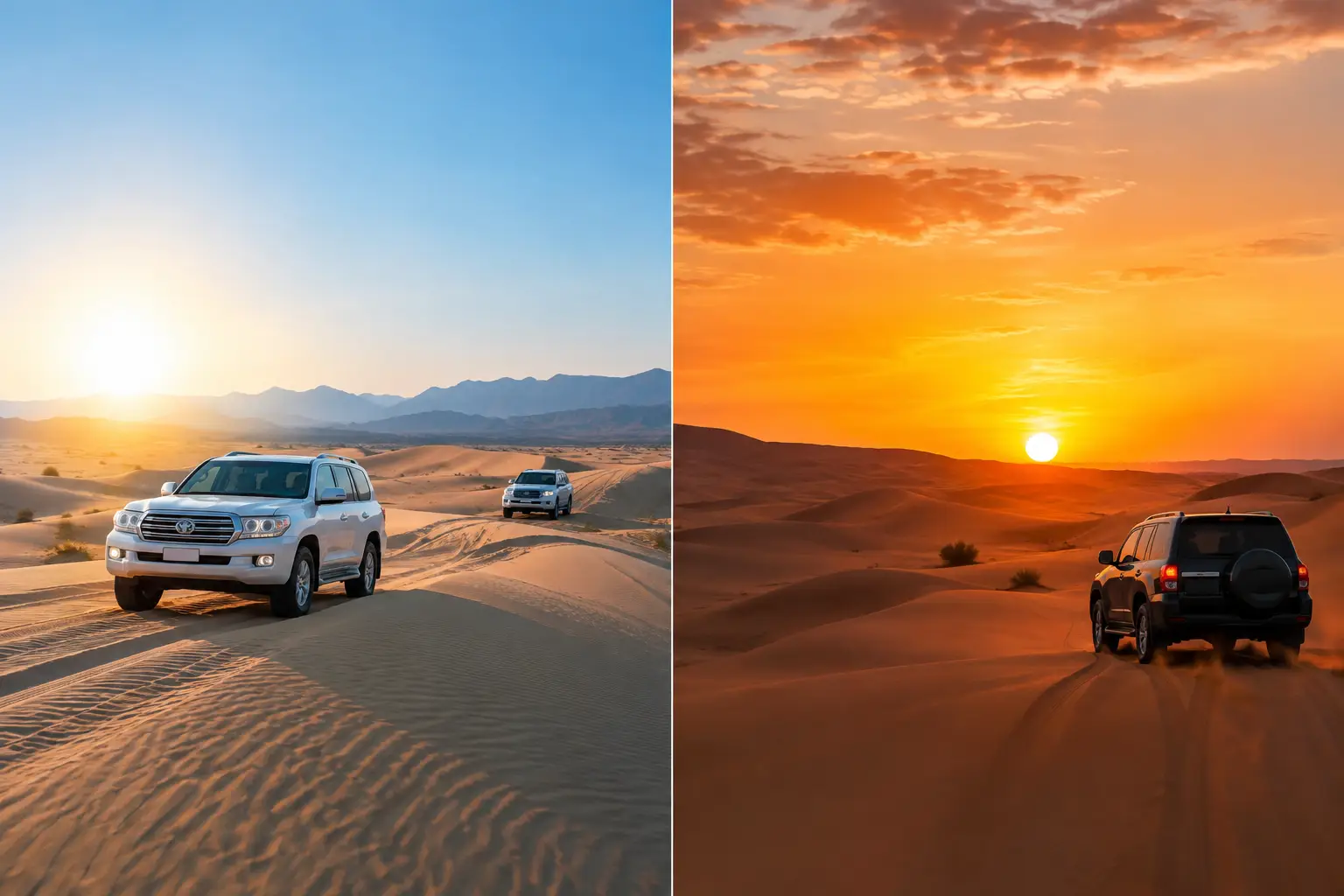
At Sandwich Harbour, the desert can feel like two completely different worlds before and after midday. Morning versus afternoon desert tours is not just a question of what fits your schedule. It shapes the temperature, the light, the energy of the dunes, and the kind of memories you take home from Namibia.
A sunrise-side drive can mean cool air, softer sand, and the thrill of watching the coast and desert wake up. An afternoon adventure brings warmer conditions, long shadows, golden dunes, and the kind of sundowner views that stop a whole vehicle in its tracks. Neither is automatically better. The right choice depends on your travel style, the people in your group, and what you want most from your time in the sand.
Morning Versus Afternoon Desert Tours: The Real Difference
Desert conditions change quickly. Along Namibia's coast, early mornings may begin with mist or cool Atlantic air, while inland dunes can heat up fast as the sun climbs. By late afternoon, the harsh midday glare fades and the landscape takes on its richest colors.
That means a tour is never only about the clock. Morning trips tend to feel active and fresh. Afternoon trips are often more atmospheric and relaxed, especially when they finish with a sundowner over the dunes. For high-energy dune driving, sandboarding, photography, or a family outing, timing can make a real difference.
Why Choose a Morning Desert Tour?
Morning is a strong choice for travelers who want to get moving early and keep the rest of the day open. If you have a packed Namibia itinerary, an early desert experience lets you enjoy the dunes, return for lunch, and still have time for Walvis Bay, Swakopmund, or the road ahead.
Cooler temperatures and more energy
The biggest advantage is comfort. Morning temperatures are generally more forgiving, particularly for anyone walking on sand, trying sandboarding for the first time, or traveling with children. The vehicle ride is still full of excitement, but you are less likely to feel drained by the heat before the adventure has really begun.
Cooler sand and air can also make a hands-on experience more enjoyable. Beginners taking a dune driving lesson can focus on technique rather than battling the heat. Self-drive travelers joining a guided route or receiving practical dune guidance may find the start of the day easier for learning how the terrain behaves.
A sharper, more active desert feel
Morning light is clean and crisp. It brings out dune lines, wind patterns, and the dramatic meeting point of ocean and sand around Sandwich Harbour. The look is less golden than sunset, but it can feel more raw and expansive.
Early tours also suit travelers who prefer adventure before relaxation. You start with adrenaline, tackle steep slopes and rolling dunes with an expert guide, then spend the afternoon at your own pace. For groups with limited time, that is a practical win.
What to keep in mind
A coastal morning can be colder than visitors expect, especially when fog rolls in from the Atlantic. Bring a light jacket or windbreaker, even if the forecast looks warm. The fog is part of the coastal desert character, but it can soften distant views until the sun burns through.
Morning is also not always the best choice if your top priority is warm, glowing photography. You will still get incredible scenery, but the famous amber tones of late-day dunes are usually stronger in the afternoon.
Why Choose an Afternoon Desert Tour?
Afternoon tours are built for travelers who want the desert at its most cinematic. As the sun lowers, shadows stretch across the slopes, dune ridges become more defined, and the colors shift from pale sand to deep orange and red. It is a brilliant setting for couples, photographers, and anyone chasing a big Namibia moment.
Golden light and epic sundowner views
The late afternoon is when the desert puts on a show. At locations such as Sandwich Harbour, the contrast between the Atlantic Ocean, lagoons, salt flats, and towering dunes becomes especially dramatic. This is the time for photos that look as powerful as the experience felt.
A sundowner tour adds a slower finish to the adventure. After the rush of dune driving, you can pause, take in the horizon, and watch the landscape change color. It is adventurous without needing to be nonstop, which makes it a great option for mixed groups with different comfort levels.
A relaxed rhythm for your travel day
Not everyone wants to set an alarm while on vacation. An afternoon departure gives you time for a slow breakfast, a morning walk, or a relaxed drive into town before heading into the dunes. That can be especially appealing after a long transfer day or for travelers staying in Swakopmund or Walvis Bay.
The timing also works well for people who want a memorable final activity before dinner. You can spend the day exploring at an easy pace, then finish with a powerful desert experience instead of trying to fit one more stop into the morning.
What to keep in mind
Heat is the trade-off. Depending on the season and location, early afternoon can be significantly warmer than morning. A quality operator plans around conditions, provides practical guidance, and keeps the experience safe, but you should still bring water, sunscreen, sunglasses, and a hat.
Wind can also increase later in the day along the coast. That does not stop the fun, but it changes how exposed the dunes feel. If you are prone to sun sensitivity, traveling with very young children, or hoping for a cooler sandboarding session, morning may be the more comfortable fit.
Which Time Is Better for Sandboarding and Dune Driving?
For first-time sandboarders, morning often has the edge because cooler conditions make the walk back up the dune easier. You will still get the speed, laughter, and sandy face shots that make sandboarding unforgettable, but with more energy in reserve for another run.
Afternoon sandboarding can be fantastic when the weather is moderate and the group is ready for the heat. The low sun creates a spectacular backdrop, especially for photos and videos. Just be honest about your appetite for warm sand and physical activity.
For guided dune driving, both times can deliver serious excitement. Skilled drivers read the sand, slopes, and changing terrain throughout the day. The focus should be on going with an operator that understands the route and conditions, not on assuming one time guarantees better driving.
If you are driving your own 4x4, timing matters even more. Sand conditions, visibility, tides near coastal routes, and weather can affect what is sensible and safe. A guided experience or professional instruction gives self-drive explorers the confidence to enjoy the terrain without turning a dream day into a recovery situation.
The Best Choice for Families, Couples, and Groups
Families usually benefit from a morning tour, particularly with younger children. The cooler start, higher energy levels, and earlier finish make the day easier to manage. That said, older kids and teens often love an afternoon dune session, especially if sandboarding and a dramatic sunset are on the plan.
Couples often gravitate toward the afternoon for the mood and the photos. A sunset over the dunes feels like a proper occasion, whether you are celebrating a honeymoon, anniversary, or simply an unforgettable stop on your Namibia trip.
For friend groups, it comes down to pace. Book the morning if your crew wants action first and a free afternoon afterward. Choose later in the day if you want to build toward a big finish, with dune driving, laughter, photos, and sundowner scenery all in one experience.
A Quick Way to Decide
Choose a morning desert tour if you want cooler conditions, a more energetic start, easier sandboarding, or more flexibility later in the day. Choose an afternoon tour if your priority is golden light, long shadows, a slower vacation rhythm, or a spectacular sundowner finish.
Weather and local conditions should always have the final say. Coastal fog, wind, heat, tides, and seasonal changes can all influence the best departure time for a specific route. A local guide can help match the experience to your group instead of forcing your plans into a one-size-fits-all schedule.
Common Questions About Desert Tour Timing
Are morning tours less scenic than afternoon tours?
Not at all. Morning scenery is sharper, cooler, and often more dramatic in a wild, open way. Afternoon is better known for warm color and shadow. The choice is about the mood you want, not whether one is scenic and the other is not.
Is an afternoon desert tour too hot?
It can be warm, especially in certain seasons, but it is manageable with the right preparation and a professionally planned route. Wear light clothing, use sunscreen, drink water, and let your guide know if anyone in your group is concerned about heat.
Can beginners join either tour time?
Yes. Beginners can enjoy guided dune driving, sandboarding, and desert sightseeing in the morning or afternoon. The key is choosing an experience suited to your confidence level and following your guide's safety instructions.
The best desert tour is the one that fits how you want Namibia to feel: cool and fast-paced at first light, or warm, golden, and unforgettable as the sun drops behind the dunes. Pick your moment, bring your sense of adventure, and let the desert do the rest.