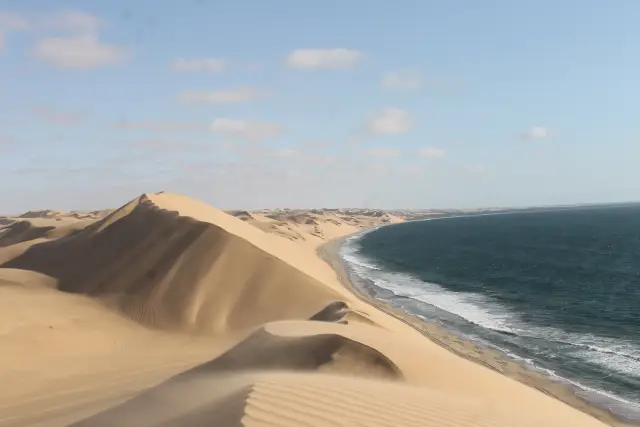
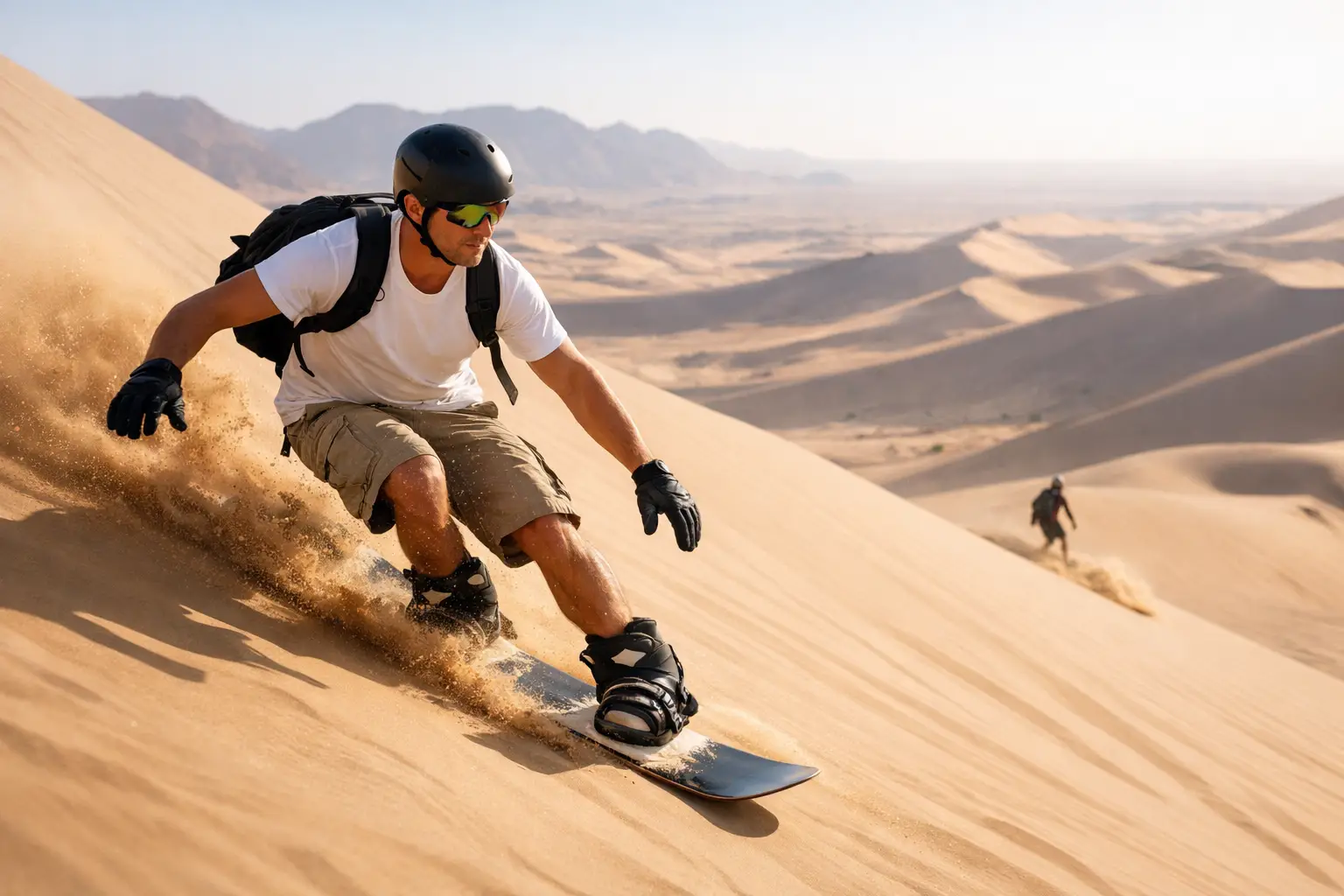
The Namibia sandboarding experience review starts with one truth: photos do not prepare you for the height of a real dune. From the top, the slope looks almost vertical, the Atlantic air cuts through the desert heat, and the run below feels impossibly long. Then you push off, pick up speed, and understand why this is one of the most memorable add-ons to a Swakopmund adventure.
Sandboarding in Namibia is not a polished resort activity with groomed snow and lift lines. It is sandy, physical, loud, fast, and completely surrounded by dramatic desert scenery. For travelers who want more than a quick photo stop, it delivers a proper rush without requiring previous board-sport experience.
Namibia Sandboarding Experience Review: The Real Feel
The first run is equal parts excitement and hesitation. Most beginners start lying flat on a board, feet first, with the instructor giving clear directions on body position, braking, and when to lift your feet. This is the fastest and most confidence-building way to experience the dune. Once you are moving, the board skims over the sand with a surprising amount of speed.
The ride is intense, but it is also short enough to feel manageable. You are focused on the slope, the wind, and the sensation of accelerating over soft sand. At the bottom, the usual reaction is laughter, a face full of sand, and an immediate question: can we do that again?
Standing runs are a different challenge. They require balance, a willingness to fall, and patience with the sand beneath the board. Travelers with snowboarding, surfing, or skateboarding experience may find the stance familiar, but sand behaves differently. It is softer and less predictable, so even confident riders should expect a few tumbles.
That is part of the appeal. Sandboarding is not about looking perfect on the first attempt. It is about trying something wild in a setting that feels far from ordinary.
What Makes Sandboarding in Namibia So Special?
Namibia's dunes bring a scale that smaller sandboarding destinations struggle to match. The landscape around Swakopmund combines towering golden slopes, wide-open desert, and the cool influence of the nearby coast. One moment you are climbing a dune in dry heat; the next, a breeze rolls in from the Atlantic and changes the entire feel of the afternoon.
The experience is also more accessible than it looks. You do not need to bring a board, know how to ride, or arrive with technical skills. A professional guided session provides the equipment and shows you how to use it safely. Beginners can start lying down, while travelers who want more challenge can try standing techniques after they have found their confidence.
There is a trade-off, though. Sandboarding is not passive. You need to walk back up the dune after each run, and deep sand makes even a short climb feel like a workout. That effort is worth it for most people because the view from the top is epic, but it is worth considering if you have limited mobility, a knee issue, or simply do not enjoy exertion in the sun.
Is It Safe for First-Timers and Families?
Yes, when the activity is run with the right equipment, clear instruction, and a guide who understands the dune conditions. A good operator chooses slopes suitable for the group, explains how to brake, and manages the order of each descent so riders have plenty of space.
The biggest beginner mistake is trying to force a standing run before feeling comfortable. There is no prize for skipping the lying-down ride. Starting low and fast on your back gives you the thrill with a more stable position, and it helps you understand how the board responds before attempting anything more technical.
Families can enjoy sandboarding, but suitability depends on a child's age, confidence, and the operator's minimum-age policy. Children who enjoy outdoor play and are happy with speed often love it. More cautious kids may prefer watching a few runs first or riding in the more secure lying-down position. Parents should mention the ages and experience levels in their group before booking so the session can be matched to everyone properly.
Wear closed-toe shoes if possible, use sunscreen generously, and bring water. Sunglasses help with glare, although goggles can be more comfortable when the wind picks up. Sand gets everywhere, so leave delicate electronics in a secure bag and do not expect to stay spotless.
The Best Part, and the Part People Underestimate
The best part is the combination of adrenaline and scenery. Unlike an amusement park ride, the setting is not built around the activity. The dunes were already spectacular. Sandboarding simply gives you a reason to race through them.
The underestimated part is the climb. Reaching the top repeatedly can be demanding, particularly in midday heat. This is why timing matters. Morning and late-afternoon sessions are often more comfortable, with softer light for photos and less punishing temperatures. Wind conditions can change quickly near the coast, so flexibility is useful.
If you are booking with friends, expect different reactions. One person may want to go faster every run while another is happy after a single descent. The strongest sessions allow room for both. There should be no pressure to ride beyond your comfort level, and no need for the cautious member of the group to sit out the entire adventure.
Guided Sandboarding vs. Going Alone
It may be tempting to rent equipment and find a dune on your own, especially if you are already traveling with a 4x4. But guided sandboarding has a clear advantage: local knowledge. Desert access, dune angles, weather, and safe run-out areas all matter more than they appear from a roadside viewpoint.
A guide also removes the frustrating parts. You do not need to source the right board, figure out how to wax it for sand, or spend valuable vacation time searching for a suitable slope. Instead, you arrive ready to ride, get a proper briefing, and focus on the experience.
For travelers who want a bigger desert day, sandboarding pairs well with a 4x4 dune excursion or a coastal adventure near Swakopmund. Dominus Dune Tours can help turn those separate moments into one high-energy desert outing, especially for groups that want both scenic driving and a hands-on activity.
Who Will Love It Most?
Sandboarding is a strong fit for couples looking for an active shared memory, groups who want a break from sightseeing, and families with adventure-ready kids. It is also ideal for travelers who have limited time in Namibia but still want a real desert story to take home.
It is less suitable for anyone expecting a quiet, effortless landscape experience. There will be sand in your clothes, a climb between rides, and a few moments when your nerves speak up louder than your confidence. That is exactly why many people remember it more vividly than another scenic drive.
You do not need to be an athlete to enjoy it. You just need to be willing to listen to the guide, accept that falling softly into sand is possible, and take the first push over the edge. Once you do, the desert stops being a view and becomes the adventure.