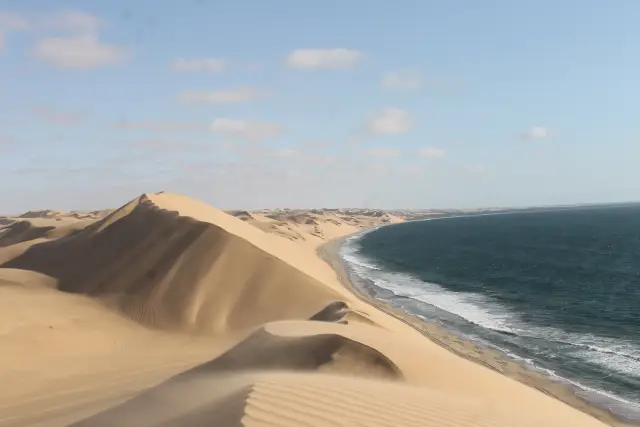
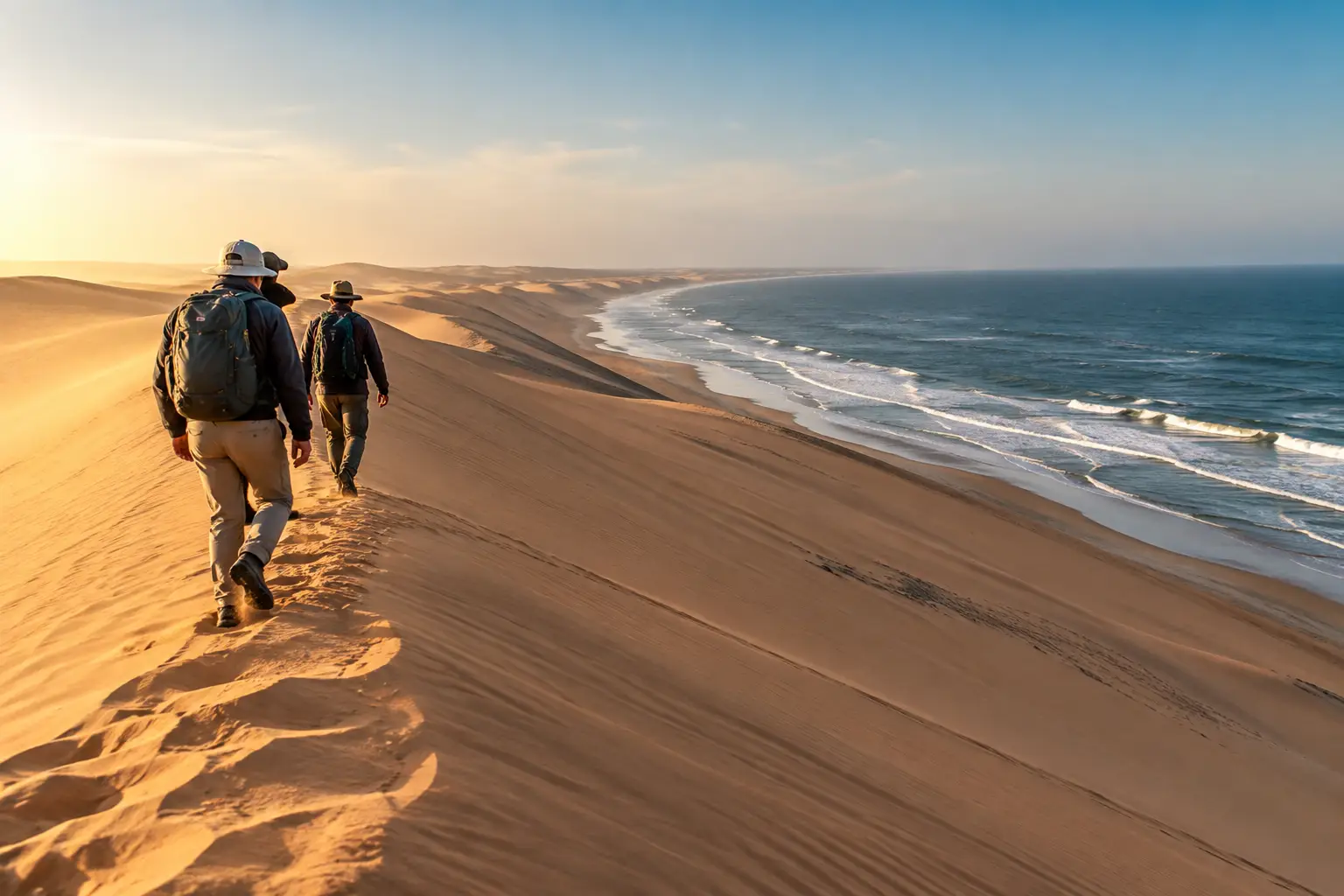
The first view is all horizon: Atlantic fog rolling over the beach, sand rising in huge golden walls, and tire tracks disappearing where the desert meets the sea. Skeleton Coast dune excursions are not standard sightseeing drives. They put you in one of Namibia’s most dramatic environments, where every route changes with the tide, wind, and shifting sand.
This is the kind of adventure that rewards a little planning. Pick the right departure area, travel with people who understand coastal dune conditions, and you can experience steep climbs, wide-open viewpoints, wildlife sightings, and the raw energy of the Namib Desert without taking unnecessary risks.
What Makes This Coast Different
Namibia’s coast is a landscape of extremes. Cold Atlantic air creates mist and fog that can move in quickly, while the desert beyond it remains dry, bright, and fiercely beautiful. The result is an ever-changing surface of compact beach sand, soft dune faces, salt pans, gravel plains, and narrow routes that can vanish after a strong wind.
That is why dune driving here feels so different from a normal 4x4 trip. Momentum matters. Tire pressure matters. Reading the angle of a dune matters. So does knowing when a route is no longer safe because of the incoming tide or poor visibility.
The reward is enormous. From the top of a high ridge, you may see the Atlantic on one side and endless dunes on the other. In the right conditions, the sand is deeply colored at sunrise or late afternoon, while the ocean looks silver under the fog. It is wild, cinematic country, and it deserves respect.
A Quick Geography Note
Travelers often use “Skeleton Coast” to describe Namibia’s entire haunting Atlantic shoreline. Technically, the Skeleton Coast region extends north from around the Swakopmund area, while famous coastal dune destinations such as Sandwich Harbour sit farther south near Walvis Bay.
For your trip, the name matters less than the route and departure point. Ask exactly where your excursion goes, how much dune driving is included, and whether the experience focuses on coastal scenery, technical 4x4 action, wildlife, or a combination of all three. A quality operator will be clear about the terrain rather than promising one massive stretch of coast in a single day.
Choosing Skeleton Coast Dune Excursions That Fit Your Style
The best trip depends on how you want to experience the desert. Some travelers want to sit back, hold on, and let an experienced guide tackle the dunes. Others want to build confidence behind the wheel of their own rental 4x4. Both can be unforgettable, but they are not interchangeable.
A guided dune excursion is the strongest choice for first-time visitors, families, couples, and anyone who wants the full scenery without managing route-finding. Your guide handles tire pressures, dune lines, recovery planning, weather changes, and local access requirements. That leaves you free to enjoy the big moments: a steep descent, a stop above the ocean, or a quiet stretch of beach with no buildings in sight.
Self-drive adventures offer more hands-on satisfaction, especially for travelers already comfortable in a 4x4. But confidence on paved roads or gravel tracks does not automatically translate to soft coastal sand. If you choose this route, a guided introduction or dune driving lesson is a smart move. You will learn how to approach a dune, keep momentum without over-speeding, descend safely, and avoid digging your vehicle into loose sand.
Private excursions are worth considering when your group has a specific goal. You may want a slower scenic day with plenty of photo stops, a more adrenaline-focused dune drive, or a family-friendly pace for younger travelers. A private route can often be shaped around those priorities, subject to tides, weather, and access conditions.
The Conditions That Shape Every Ride
No two coastal dune days are exactly alike. The biggest variable is the tide. In some areas, the beach route narrows dramatically at high tide, and sections can become impossible or unsafe to cross. Operators plan around tide tables because there is no value in rushing a vehicle along a shrinking strip of sand with the ocean on one side and a dune wall on the other.
Fog is another part of the experience. It can create incredible atmosphere and cooler temperatures, but heavy fog reduces visibility. A good guide will adjust the route and speed instead of forcing the original plan. This is not a disappointment. It is how responsible dune travel works.
Wind shapes the terrain too. It can soften a familiar dune face, cover old tracks, and reshape crests overnight. The desert is never frozen in place. That is exactly why local knowledge makes such a difference.
What the Adventure Actually Feels Like
Expect a mix of speed, stillness, and spectacular changes in elevation. One minute you may be crossing flat, firm beach sand with the ocean beside you. The next, the vehicle climbs a steep dune ridge and the view opens up in every direction.
There is adrenaline, especially on sharp descents and high traverses, but a well-run trip is not about reckless driving. It is about controlled momentum and knowing the terrain. Skilled guides make difficult-looking routes feel confident because they understand where the sand is stable, where to turn, and when to take a wider line.
Stops matter as much as the driving. You may step out to photograph sand patterns, spot tracks, feel the temperature difference between beach and dune, or simply stand in the silence. The coast can look empty at first glance, yet there is life adapted to this harsh place. Keep an eye out for shorebirds, springbok, jackals, and, depending on the route and season, seals along the coastline.
What to Wear and Bring
The coast can be surprisingly cool in the morning and hot once the fog lifts. Dress in layers, even if the forecast looks warm. A light windproof jacket, closed shoes, sunglasses, sunscreen, and a hat will serve you well. Sand gets everywhere, so leave delicate accessories behind and use a secure strap for your phone or camera.
Bring water, but do not overpack. Most guided excursions have space for essentials, and lighter gear is easier to manage when you are climbing in and out of a 4x4 or walking along a dune ridge. If you are prone to motion sickness, take precautions before departure. Dune driving involves angles and movement that feel very different from a road trip.
For photographers, late afternoon often delivers the strongest contrast and warmer colors. Morning trips can offer softer light, cooler temperatures, and more misty coastal atmosphere. Neither is automatically better. Choose based on whether you want golden dune color or the moody meeting of fog, ocean, and sand.
Safety Is Part of the Thrill
This terrain is exciting because it is real, not staged. That also means safety should be visible in the way a trip is run. Look for an operator that uses suitable 4x4 vehicles, adjusts tire pressure for sand, monitors tide windows, carries recovery equipment, and gives passengers clear instructions before difficult sections.
If you are self-driving, never treat a coastal dune route as an unplanned shortcut. Avoid driving alone in unfamiliar soft sand, know how to use recovery gear before you need it, and do not follow old tracks blindly. Tracks can lead to soft bowls, steep drop-offs, protected areas, or a beach section that is no longer passable.
At Dominus Dune Tours, the goal is to make the adventure feel big while keeping the decisions behind it professional. Beginners do not need prior dune-driving experience to enjoy the landscape. They need the right vehicle, the right guidance, and enough time to take it all in.
Make the Most of Your Day
Do not schedule your dune excursion as a rushed gap between long drives. Give yourself time afterward to shake off the sand, review the photos, and enjoy the coast at a slower pace. The best desert memories usually come from the unexpected moments: the fog lifting at the right time, the first look over a dune crest, or the laughter after a thrilling descent.
Come ready for a little sand in your shoes and a lot of scenery you will not forget. Namibia’s coastal dunes do not offer a polished, predictable ride. They offer something better: a powerful day in a landscape that still feels completely untamed.