
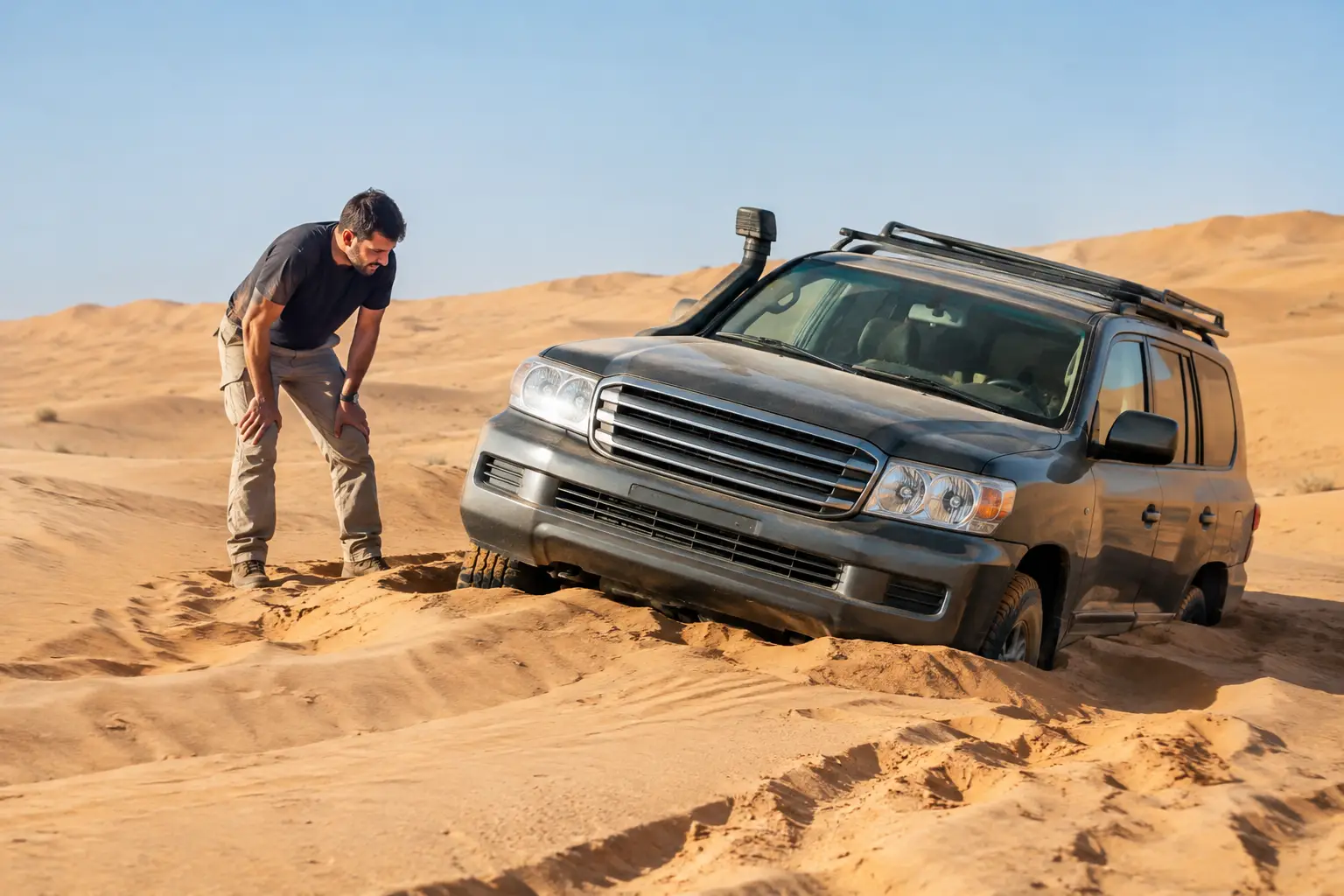
A dune can look like an open invitation from the driver’s seat: clean sand, huge views, and a line that appears easy enough to follow. Then the wheels start digging, the vehicle loses momentum, and the desert gets very quiet. The most common dune driving mistakes happen when drivers treat sand like a dirt road instead of a constantly shifting surface with its own rules.
Namibia delivers some of the world’s most epic 4x4 terrain, from towering inland dunes to the dramatic Atlantic edge around Sandwich Harbour. It also demands respect. Good dune driving is not about charging blindly toward the highest crest. It is about reading the sand, preparing the vehicle, choosing the right line, and knowing when to stop before a minor problem becomes a long recovery.
1. Starting With the Wrong Tire Pressure
Tire pressure is one of the biggest factors in soft-sand driving. Overinflated tires cut into the surface, creating deep ruts and forcing the engine to work harder. Lowering pressure gives the tires a broader footprint, allowing them to float over the sand rather than dig straight down.
There is no single pressure that works for every vehicle, tire, load, or sand condition. A heavily loaded rental 4x4 may need a different setup than an empty vehicle on firm morning sand. Start with the vehicle manufacturer’s guidance and the advice of an experienced local guide, then adjust carefully if conditions demand it.
Do not forget the final step: reinflate before returning to paved roads. Driving on low-pressure tires at highway speeds can overheat and damage them. Carry a reliable compressor, a tire gauge, and enough time to use both.
2. Using Too Much Speed Instead of Smooth Momentum
Momentum matters in sand, but speed alone is not the answer. A fast, aggressive approach can launch a vehicle over a blind crest, damage the suspension, or send it into a soft pocket with no room to recover. The goal is controlled momentum - enough to keep moving forward, never so much that the vehicle is no longer under control.
Use steady throttle inputs and let the vehicle build speed before it reaches soft sand or a climb. Sudden acceleration causes wheelspin. Sudden braking shifts weight forward and can bury the front tires. If the vehicle begins to bog down, ease off early rather than flooring the accelerator and digging four holes at once.
On steep dunes, the correct approach depends on the slope, sand firmness, wind direction, and what is beyond the crest. That is why experienced drivers assess a dune before committing to it.
3. Forgetting to Select the Right 4x4 Mode Before You Need It
Waiting until the vehicle is already stuck is a classic error. Before entering loose sand, engage the appropriate four-wheel-drive setting and understand how your specific vehicle behaves. Many modern 4x4s have traction control, terrain modes, hill descent control, and automatic systems that can help, but those features do not replace driver judgment.
High range four-wheel drive is often useful for flowing sand tracks where momentum is needed. Low range is better suited to controlled, slow-speed work, difficult recoveries, or very steep and technical sections. The right choice is situational, so learn the controls while you are on level ground, not while pointed uphill on a dune face.
If you are in a rental vehicle, ask the rental company exactly what system it has. Buttons with desert-looking icons are not a substitute for a proper explanation.
4. Driving Straight Over a Blind Crest
A dune crest can hide a sharp drop, a narrow ridge, another vehicle, wildlife, or a steep slipface on the far side. The view may be unforgettable, but the approach must be cautious.
Slow down before the top and crest at an angle only when the terrain and route call for it. Avoid launching the front wheels over the edge. Once you can see the descent, stop if it is safe to do so and assess the line. A soft, steep downhill requires a different technique from a gradual slope with firm tracks.
When descending, keep the vehicle straight, use low gears where appropriate, and avoid sudden steering or heavy braking. A sideways slide on a dune can become a rollover quickly. If you do not have a clear view of the exit, do not assume it is safe.
5. Turning Across a Steep Dune Face
Side-sloping is one of the more serious dune driving mistakes because it loads the vehicle unevenly and increases rollover risk. Sand can collapse under the downhill tires without warning, especially on a steep, soft face. The higher the dune and the heavier the vehicle, the less forgiving the situation becomes.
Whenever possible, travel straight up or straight down a slope rather than across it. If you must turn around, choose a flatter, wider section with plenty of room. Do not make abrupt steering movements, and do not try to correct a slide by jerking the wheel uphill.
This is where a guided route offers real value. Local drivers know which dune faces are safe to traverse, which routes change after wind, and which spectacular-looking lines should be left alone.
6. Ignoring Tides and Coastal Conditions
Along Namibia’s coast, sand driving can involve another moving force: the Atlantic Ocean. At Sandwich Harbour, the route between towering dunes and the sea can narrow dramatically with the tide. A section of beach that looks wide and firm can become inaccessible far faster than first-time visitors expect.
Never rely on an old track, yesterday’s route, or a map alone. Tides, weather, windblown sand, and water levels can all change what is possible. Check current conditions, know your turnaround point, and leave a generous margin rather than driving until the sea removes your exit.
Coastal fog also affects visibility and can make distance difficult to judge. It is part of the atmosphere that makes this landscape so extraordinary, but it is another reason to follow a proven route and avoid solo guesswork.
7. Stopping in the Softest Part of the Track
Stopping on soft sand is sometimes necessary, but it should be deliberate. If you pull over randomly in deep, churned-up sand, restarting may be much harder than continuing. Before stopping, look for firmer ground, a gentle downhill section, or an area where the vehicle can move forward without immediately climbing.
If you do get stuck, resist the instinct to spin the tires. Clear loose sand from in front of the tires, reduce pressure further only if appropriate, and use recovery boards if you have them. Gentle forward and reverse movements may help pack a usable path, but stop if the vehicle sinks deeper.
A recovery strap, rated recovery points, and trained assistance matter. Never attach a strap to a tow ball, and keep people well clear of a loaded recovery line. Sand recoveries can be simple when handled correctly and dangerous when rushed.
8. Following Tracks Without Reading the Terrain
Tracks are clues, not guarantees. They may have been left by a lighter vehicle, a more experienced driver, or someone who made it through before the wind changed the surface. A route that was firm in the cool morning may be much softer after hours of heat and traffic.
Watch for changes in color and texture. Darker, compact sand is often firmer than pale, powdery sections, although coastal moisture can change that rule. Look ahead instead of staring at the hood. Good drivers read the next 50 yards, planning their line before the tires reach the difficult patch.
Following another vehicle too closely is also a mistake. Leave enough space to choose your own line and enough room to stop safely if the vehicle ahead loses momentum.
9. Treating a Desert Drive Like a Quick Detour
A proper dune outing needs more than a full fuel tank. Bring drinking water, sun protection, a charged phone, recovery equipment, a compressor, and a way to navigate. Tell someone where you are going, especially if you plan to travel beyond busy routes.
Fuel use rises sharply in soft sand, and cellular coverage can be unreliable. Desert weather can also surprise visitors: intense sun, strong wind, and coastal cold can all arrive on the same day. Preparation gives you the freedom to enjoy the adventure instead of worrying about the next problem.
For beginners, a dune driving lesson or guided trip is the fastest route to real confidence. Dominus Dune Tours combines hands-on instruction with terrain knowledge, so drivers can experience Namibia’s wild dune country with the right support behind them.
The best desert drivers are not the ones who leave the biggest rooster tails. They are the ones who come away with great photos, a capable vehicle, and memories that last a lifetime - because they gave the dunes the respect they deserve.